2026 :: six new ducklings
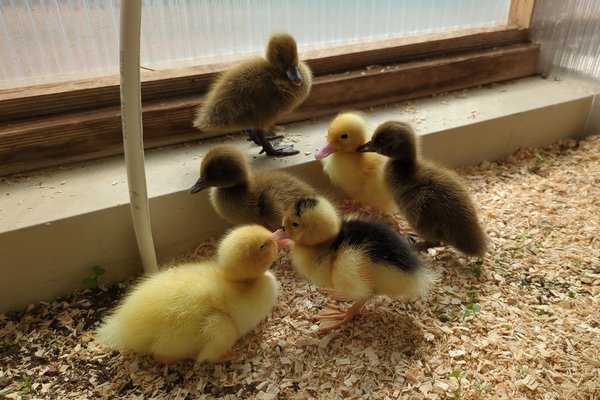
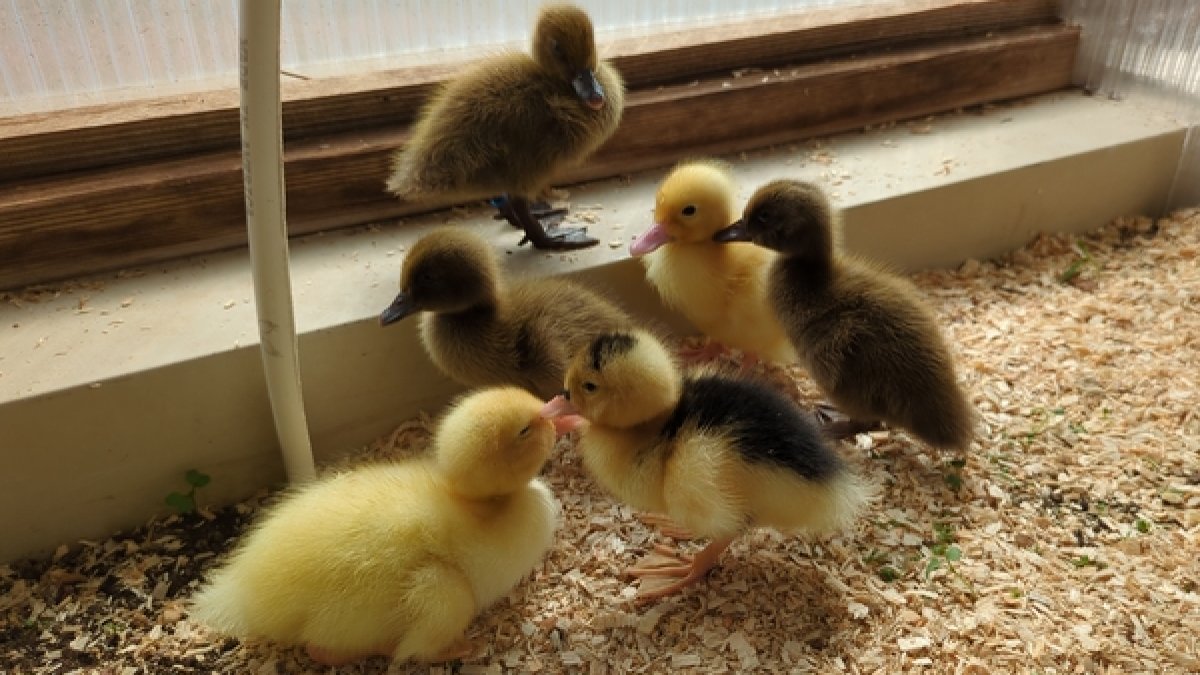
We decided to start a new flock of ducklings! It’s August 6, 2026, and our six new ducklings arrived this morning from Metzer Farms.
Although our previous four are still with us, in our past experience of keeping ducks for four years, they produced significantly fewer eggs in the fourth year. That said, we wanted to keep ahead on our egg supply, so we have a new strategy. (See: 2023-2026 Flock of Five for a refresher.)
We’re thinking that with six ducks we should be able to freeze-dry and save plenty of eggs during years 1-3 to get us through each molt season and keep some additional freeze-dried eggs in reserve, so that in years 4-6 (and beyond?) we should have enough freeze-dried eggs saved to supplement the fewer fresh eggs we get with lower production.
The focus for choosing our new ducklings was to get more high egg producers. We typically read the charts regarding the breeds’ egg production & calmness, but this time we’re merely focusing on egg production. If you’ve ever read & compared the duck breed charts available, they differ quite a bit! It’s difficult to determine which ducks will really produce the most eggs along with calmer tendencies. We really don’t like nervous, quacking ducks, but we believe we should be able to raise them to be more calm.
Our new family of ducks include: two Khaki Campbell and one each of a White Layer, Golden 300 Layer, Pekin Grimaud, and a Magpie. The first four on the list always rate high for egg production, the Pekin Grimaud isn’t one of the highest count layers but she should lay some really big eggs that are nice to have, and the Magpie is a really cute duck that Laurie likes—and she should lay a significant amount of eggs. We haven’t named them yet, but will do that as we discover their personalities.
Our new plan for brooding (or raising) the ducklings will hopefully help keep them calmer & more friendly. We don’t want “pets” to follow us around, come in the house or eat at our picnic table; we just don’t want nervous, loud ducks that quack wildly whenever we come near.
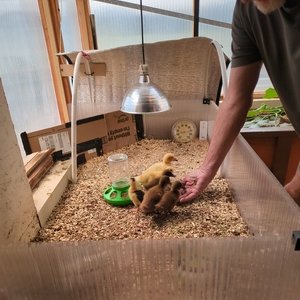
We’ve set up a brooding area in our greenhouse for the first couple of weeks, which is nice and warm and light during the day. There’s a heat lamp for heat as needed, but it’s quite warm in there when the sun is shining. It’s a perfect spot, and since we don’t grow much in the greenhouse during the summer, there’s plenty of room. They’re sitting directly on the greenhouse bed with some aspen wood shavings on top.
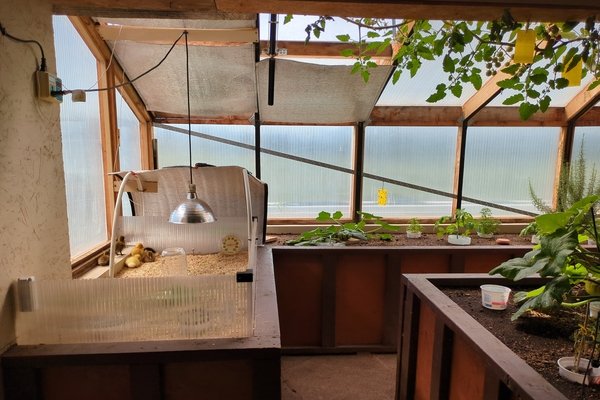
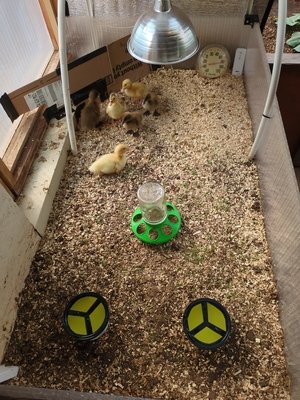
The ducklings can poop & pee & spill water on the soil and we don’t care—it will fertilize the beds for future growing. We walk in & out of the greenhouse frequently during the day, and will be able to stop to say hello, put our faces near them so they get used to us, allow them to peck at our hands or pick them up as they become more comfortable with us. They’ll get plenty of exposure to us just being near as we wander by or spend time tending plants. They are at our waist level, so we won’t be looking down on them so much or reaching down from above to grab them like we’ve done before—we may not be quite so scary as we’ve been with previous ducklings. There’s even music in the greenhouse! I can play classical music or other calming selections to keep them happy & calm… hopefully. We’re pretty confident these things will help keep the ducklings as calm as possible, even though many of the breeds we’ve chosen are often considered nervous.
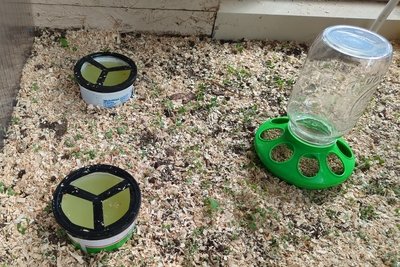
The waterers are two sour cream containers pushed down into the soil for stability, at just the right height for baby ducks. The cut-out lids allow them to drink, but they can’t jump in. As they grow, the containers can be lifted to their neck height. The yellow water is due to the VitaMetz Waterfowl Boost I’ve added to the water. The green mason jar feeder is just right for the small ducks and is easy to use.
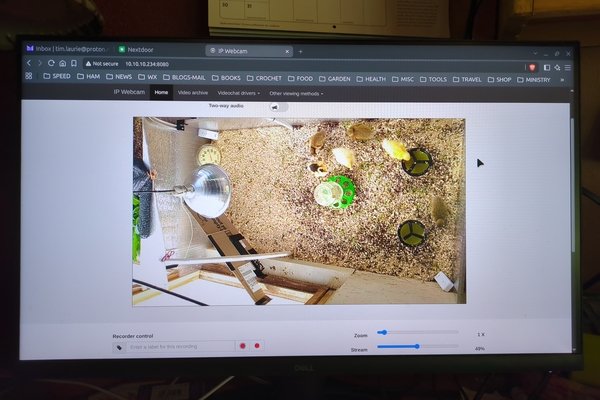
We’ve also installed a webcam above the area, so we can watch them while we’re in the house—an added, fun bonus for us. Right now I see them running around, drinking water and exploring their new home. This is how the “Duckcam” looks on my computer monitor in the house.
UPDATE 8/9/26: This is the ducks’ 4th day here, they are 6 days old. The new BROODER area is working out great. The greenhouse door is just to the left of the photos above, so when we walk in we are immediately at their side. If we stand there, it doesn’t take too long until they run over to where we are.
One big hit for them has been DUCKWEED. We have a spring at the edge of our property where we can gather it, so we brought up some for these ducks to try. It didn’t take too long for them to love it. Now, we can hold out a hand with some duckweed and within seconds they will come to nab it and jump all over our hands looking for more.
The WEATHER has been quite hot this week (highs in the upper 80’s), therefore the greenhouse has also been quite hot. There has been no need for the heat lamp to turn itself on. This has been great for the little ducks–they only need the heat lamp at night, and even then they aren’t always under it. Thankfully, the weather will be cooling some this week with cloudier days which should cool the greenhouse some. As the ducks grow they’ll require less heat, so that should work out well.
We are quite pleased with this brooder setup!
- Laurie
- Update: August 9, 2026
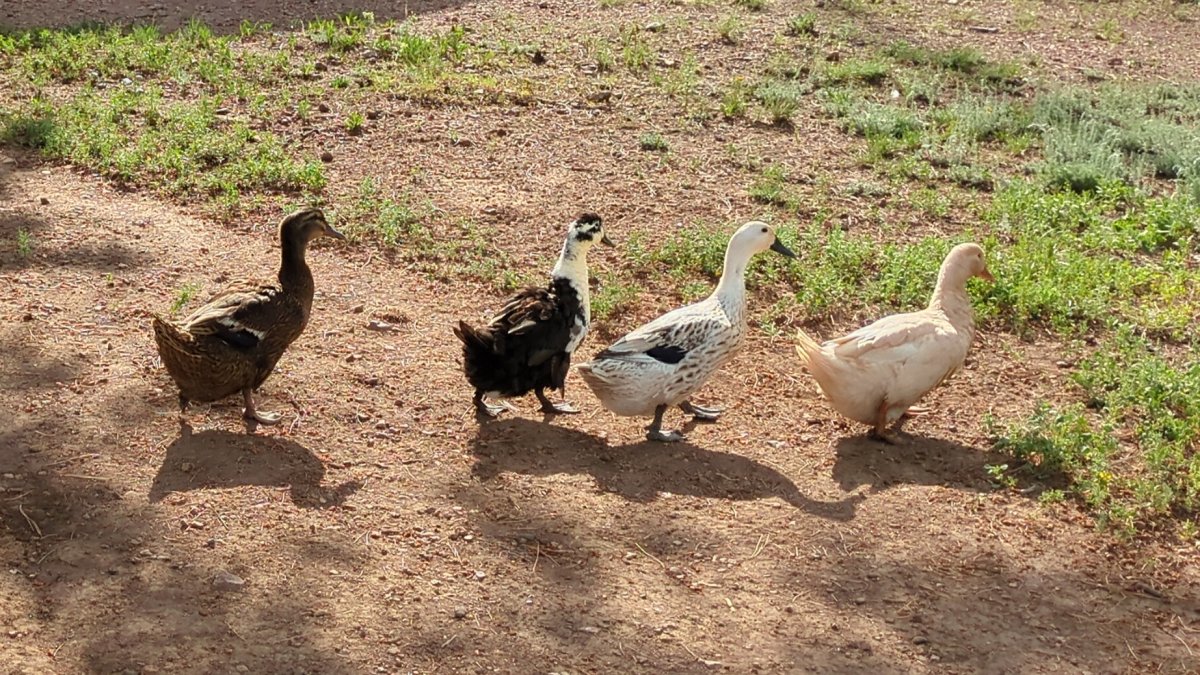
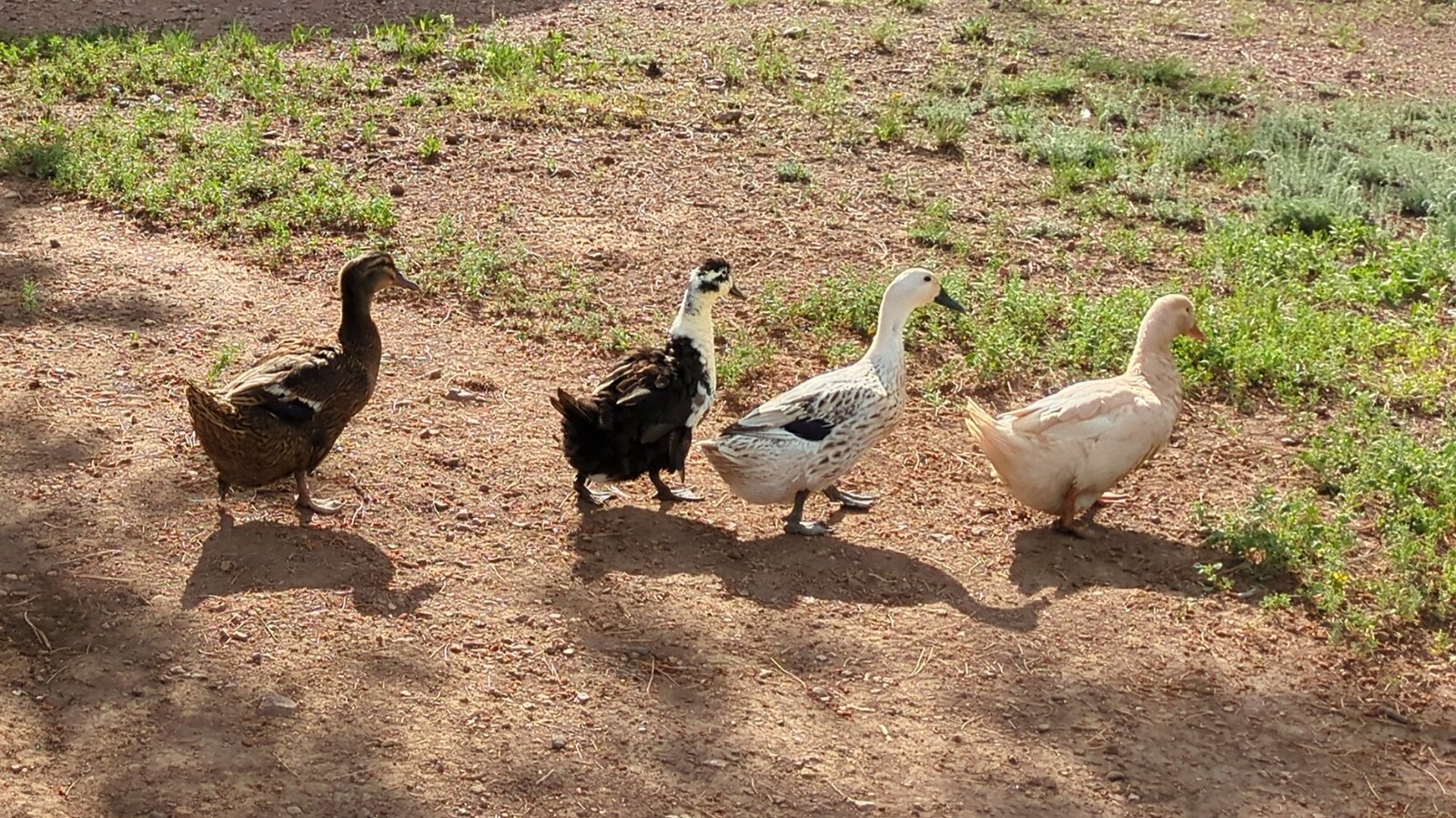
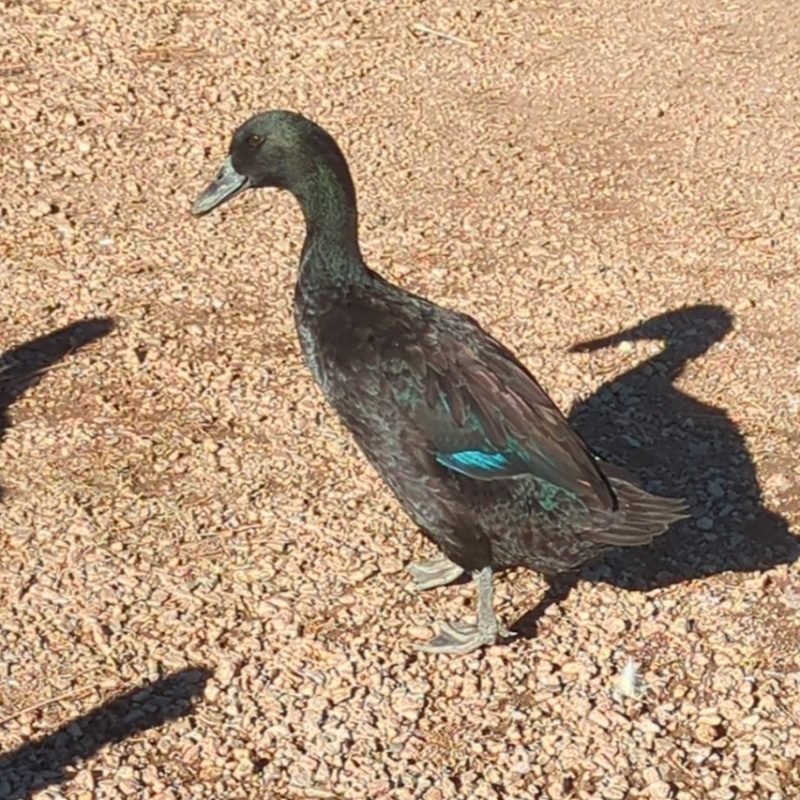




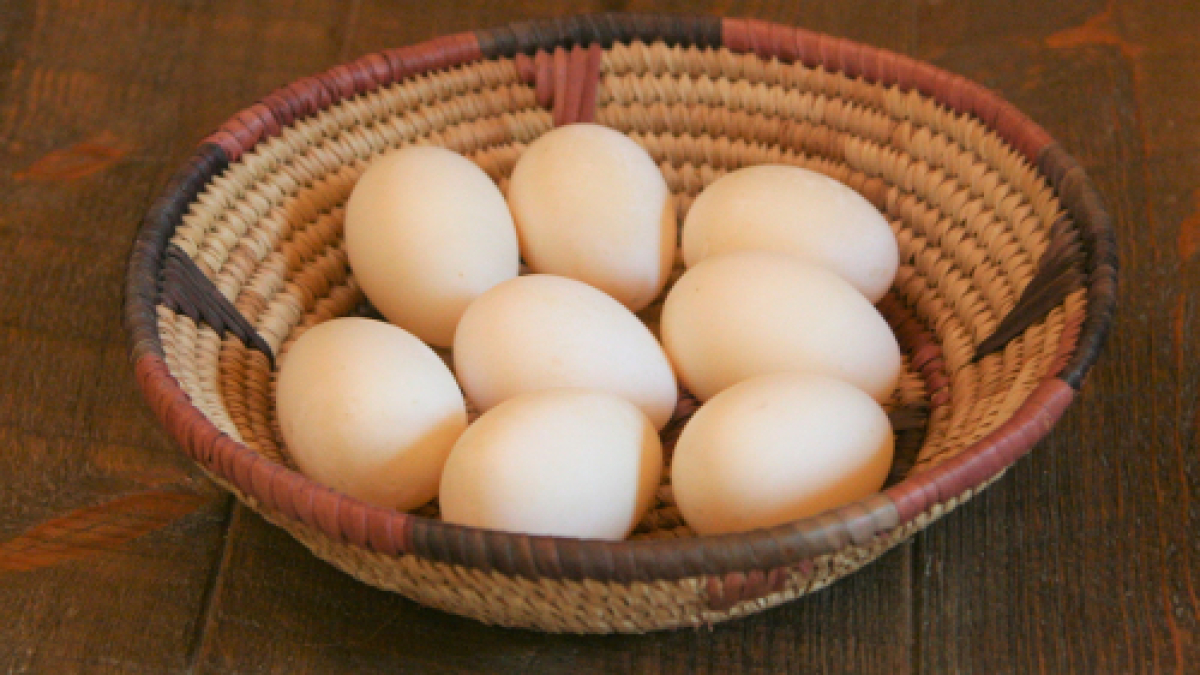

 As you can see, this lighting program has worked, and ducks are now laying. With our “Duckagon” I am able to open up the top each morning to reach in and grab eggs. If the eggs are on the far side, I have my nifty claw to shove them over.
 Now we look forward to getting 5 eggs in a day, to know that all the girls are in full swing! The ducks are now kept in their paddock until 9-10 am just to be sure we’ve gotten all the eggs. Normally eggs are laid before I get out to feed them, but occasionally there’s a late layer. Sometimes, after they’ve been let out to roam (they are free-range, after all) we find eggs in strange places: under trees or bushes, usually. This year, Tim tried crafting a next box for them to see if they’d like to put their eggs there. No eggs in that box yet (they’ve always been in the house early) but we have seen ducks take turns sitting in that box for a bit!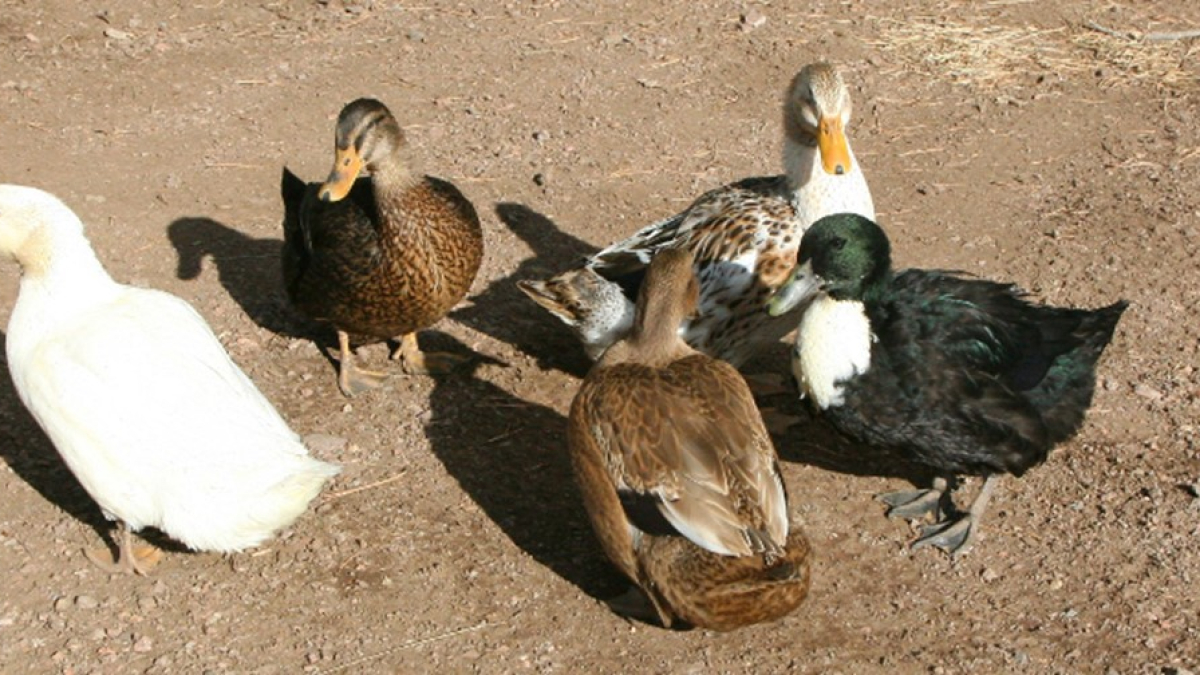
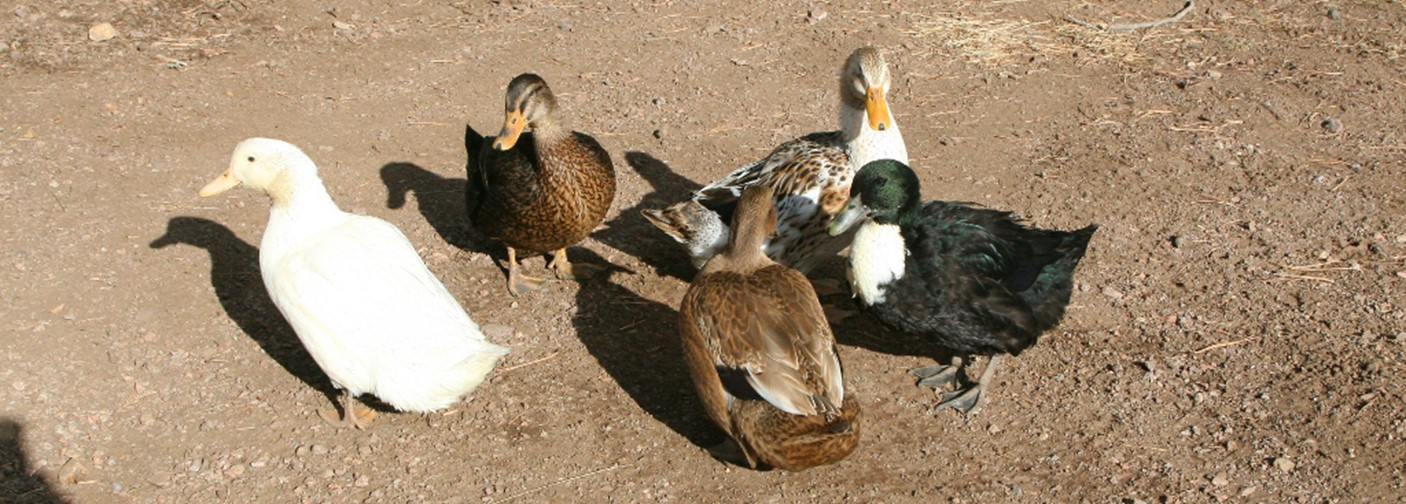
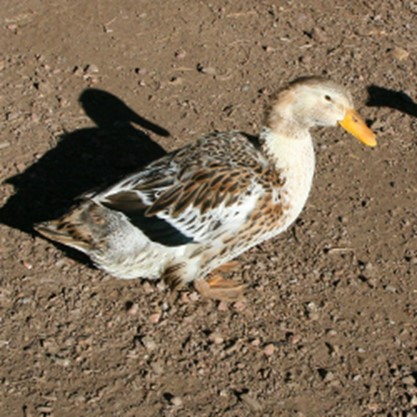
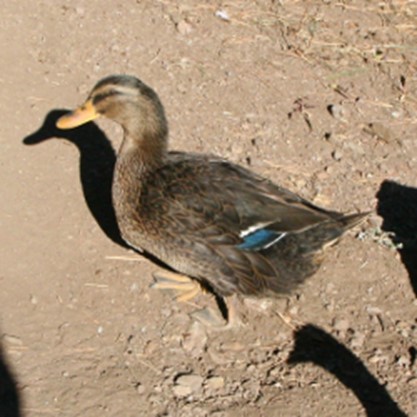
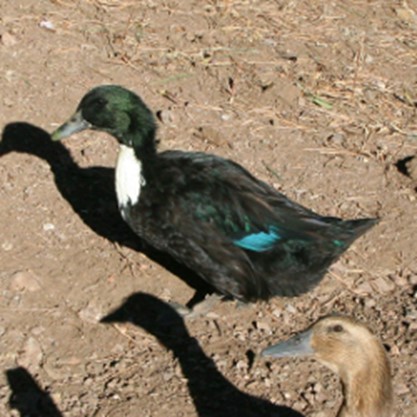
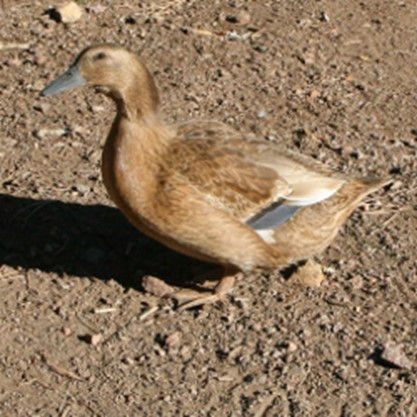
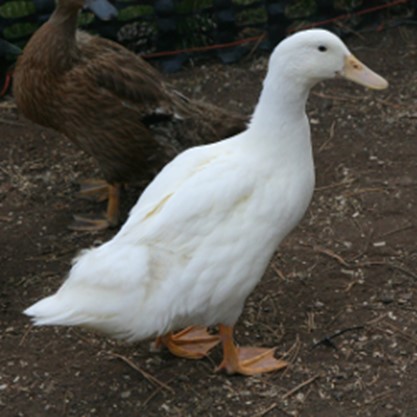
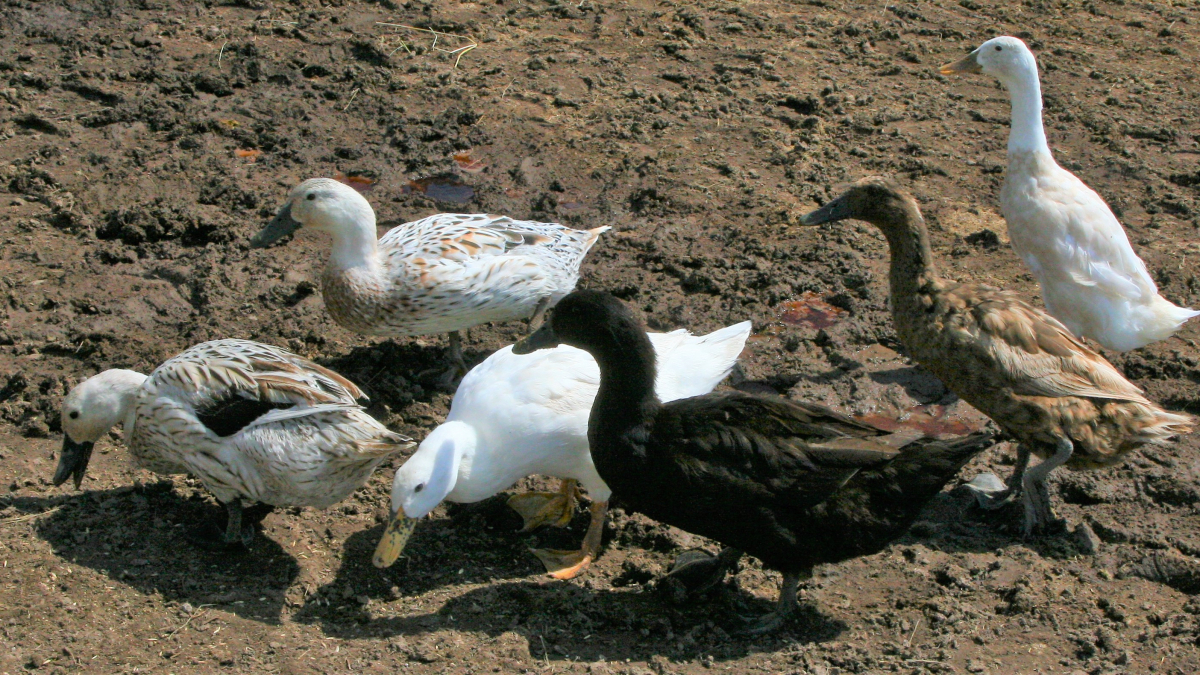

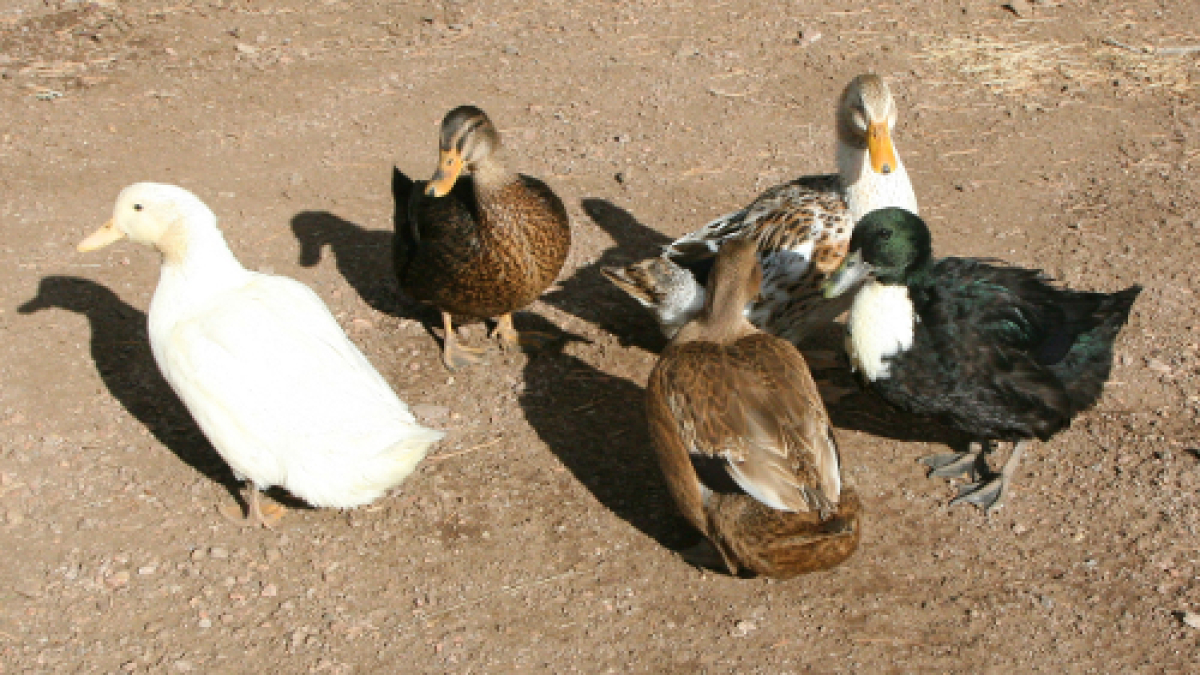
 Our “Six-Pack” of ducklings arrived in early August 2016. Many mail-order companies require a minimum of ten ducklings, but we didn’t want that many. We wanted only layers and no extra drakes we would have to butcher. We found that




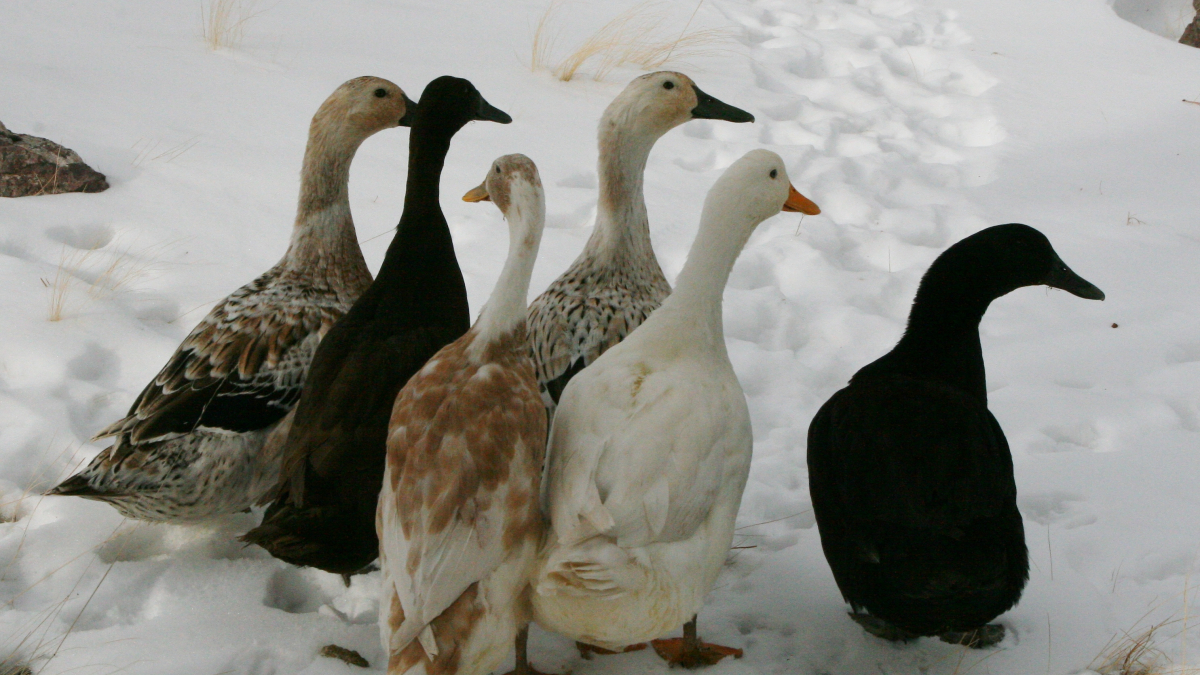

 With these cold temperatures the water does freeze, and winter adjustments need to be made. There are different ways of keeping the water liquid. My best solution is to keep a water heater in the bowl. It is on a timer, and usually turns on around 3am, so they will have water to drink in the morning. I turn it on occasionally during the day if the water is freezing, just for an hour or two off and on. The timer we have makes it easy to adjust like that. We keep our bowl on a raised platform over a hole in the ground, covered with hardware cloth. Normally the water will slowly drain from the hole into the earth. In winter this hole fills up with ice and never melts, so I need to be careful to empty the bowl without spilling more water into (onto) this hole. Recently I got out the flame thrower, melted the ice under the bowl as much as I could without burning the frame, then raised the bowl off the frame with an additional support to keep it from freezing onto the frame. I’ve found it’s helpful to keep all snow cleared from around the bowl as soon as possible. If not done, it quickly ices up and makes it nearly impossible to lift the bowl for emptying and refilling.