2013 PLANS

OK, so I’ve pretty well neglected writing on this blog.  But, if anyone is listening, I’ve just posted my garden plan for 2013 on growveg.com.
The main garden can be seen here: MAIN GARDEN
The three sisters plot is here: CORN-BEANS-SQUASH

Right now it’s pretty brown and ugly outside.  I’ve been working hard inside on plans and getting my new tracking system ready using Microsoft One Note–something I’ve never played around with before; so far it’s pretty handy.  This year I am planning to do some of the most successful varieties from past years, and a few new things to try for fun.

The strawberry bed we’ve had near our cottonwood tree has never done well.  After a suggestion and some research, I’ve discovered that cottonwoods put off juglone, a chemical that inhibits the growth of many plants.  I’ll be removing the strawberries from that bed (if they’ve survived) and will plant several perennial herbs there that are supposed to be tolerant of juglone.  Another bed near that tree has also had some sickly plants (especially the tomatoes, a couple of years ago).  I’ve found that beets, beans,  squash, onions, parsnips and carrots are supposed to do ok there, and will limit those beds to those items from now on.  I’m still learning!

The greenhouse has done well this winter, and has provided us with enough greens for salads all winter.  I’ve got some onions overwintering in there, too, and hopefully they will provide an early round of onions in the early summer.  I will also be planting a couple of early tomatoes in the greenhouse, to get a head start on them for the season.

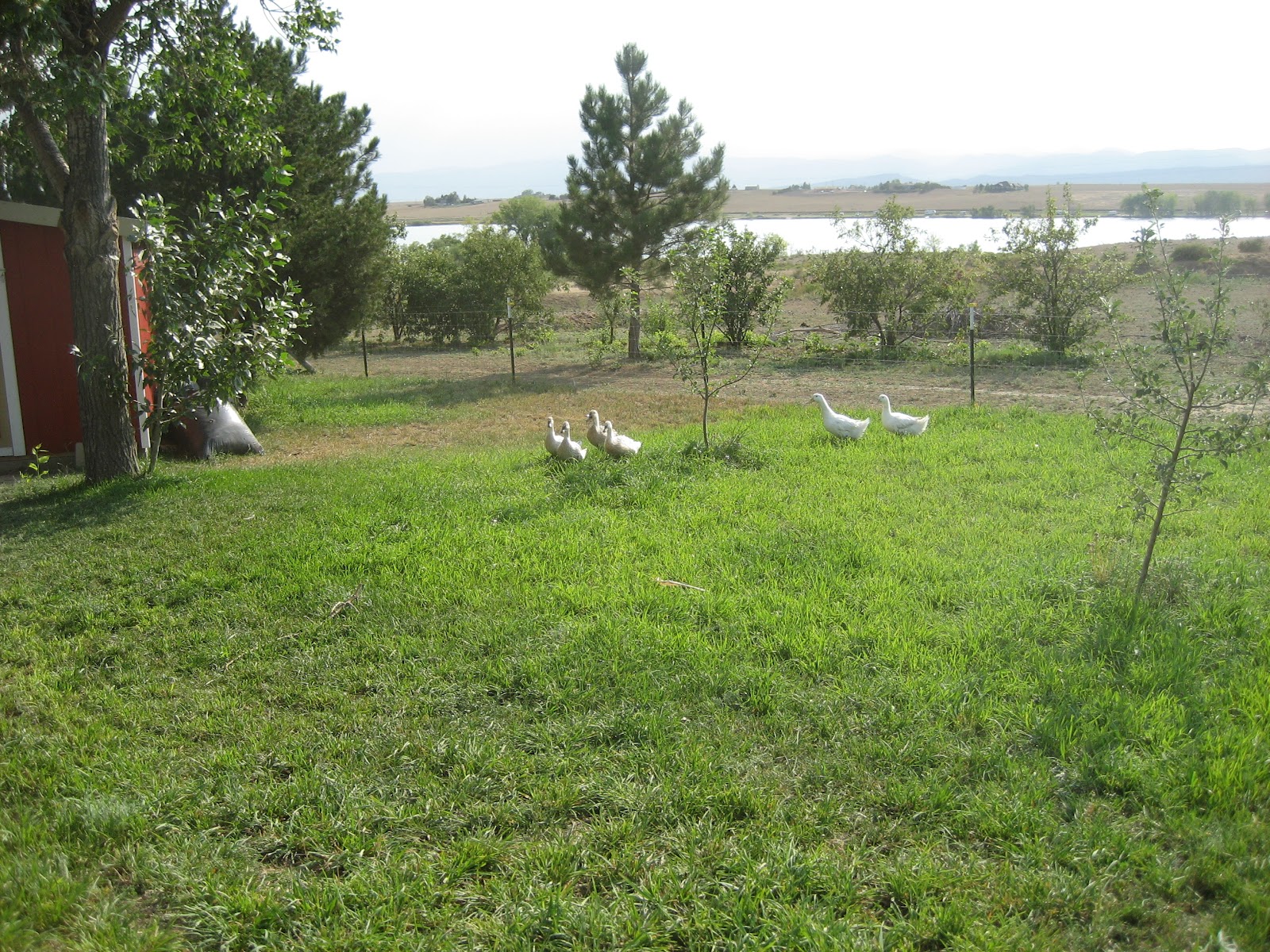
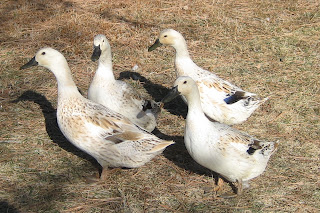
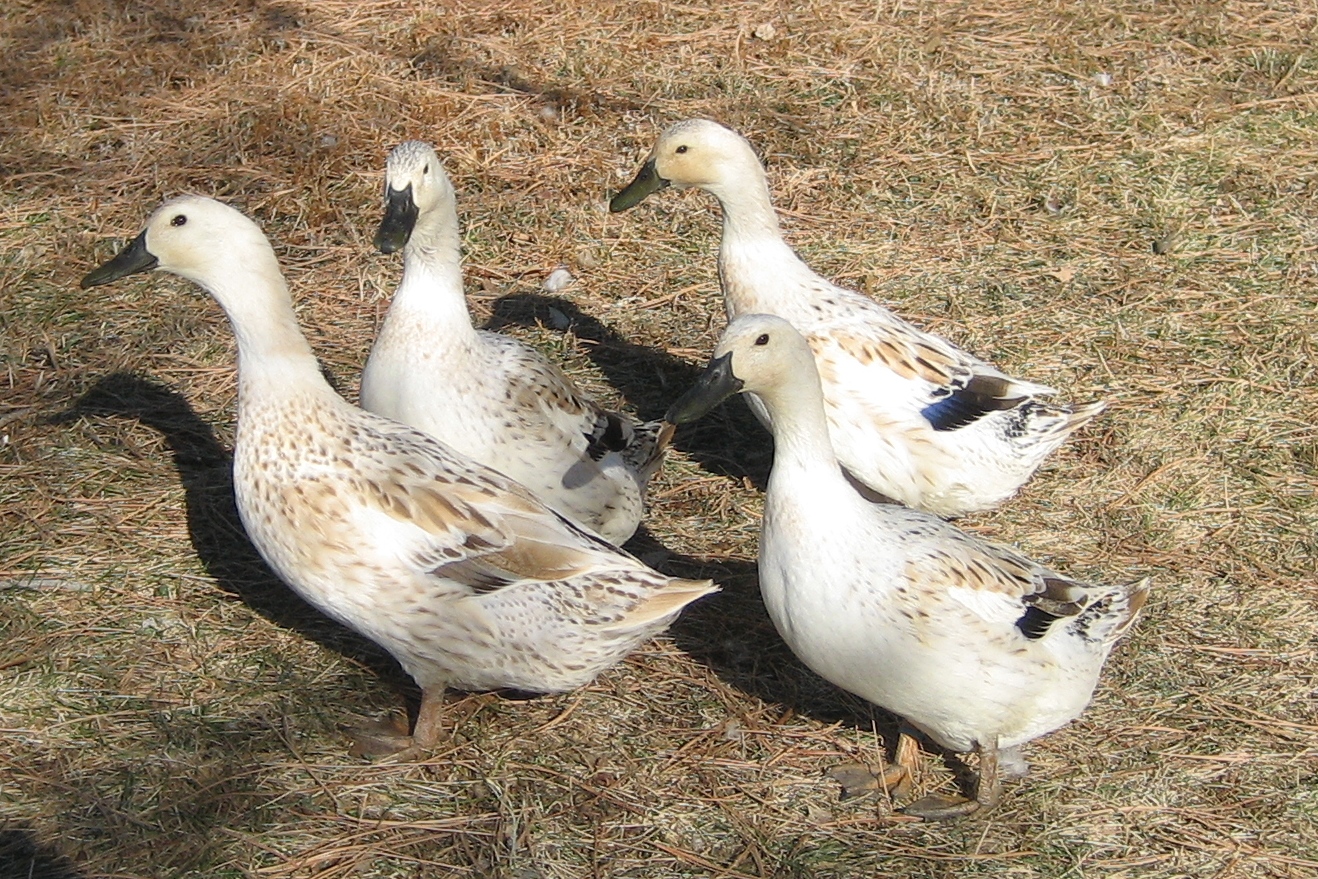
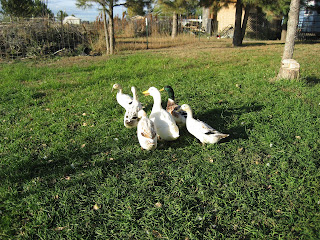
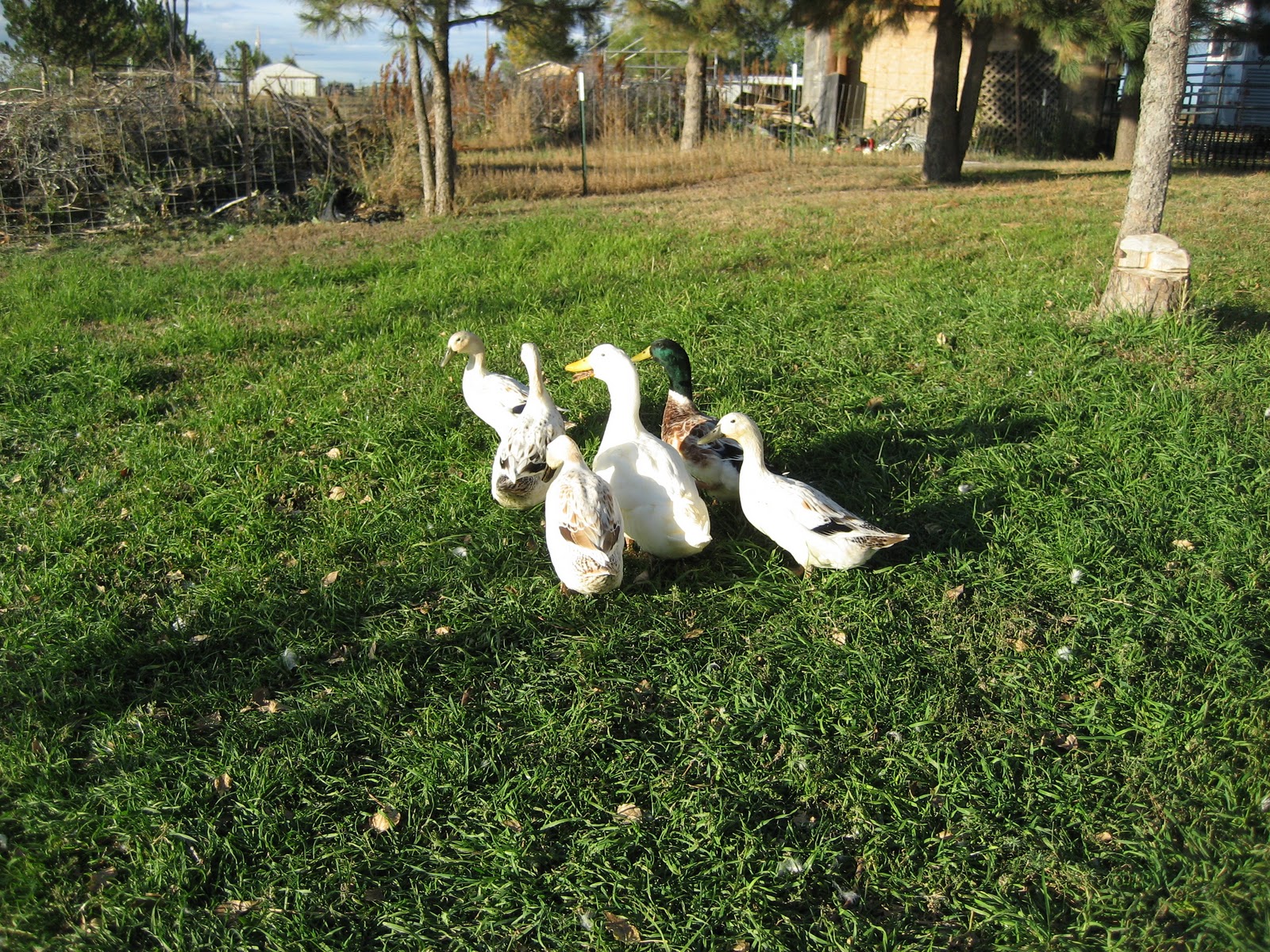
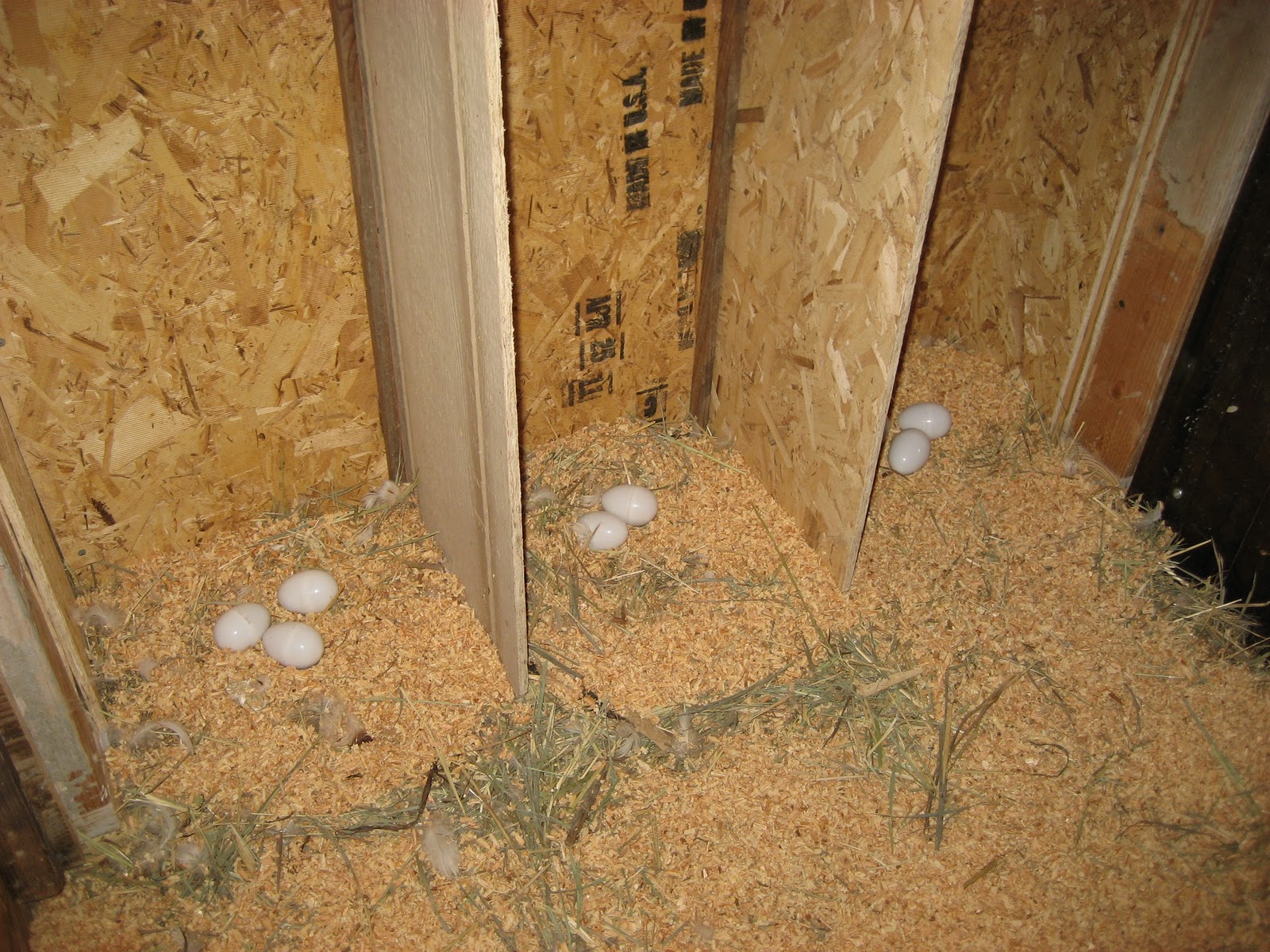
Duck Update:  We still have the ducks (3 welsh harlequin, 2 pekin) and are enjoying four eggs a day at this point.  It took them a long time to begin laying after their molt (the pekins began laying in October, the harlequins not until February).  Every day we hope to find a fifth egg.  Maybe tomorrow!
6-1=5

Sadly, Pinky is no longer with us.  She hadn’t been acting normal in mid-July and we thought we might lose her then, but then she improved.  Some days she moved slowly, but mostly she acted the same as the other ducks.  Monday she was found dead.  This was one of the reasons we got the two new ducks–in case something happened to any of the others.

As it is now, after getting the two new whiteys, all ducks have gone into their molt and we have not gotten any eggs since a couple of days after we got the whiteys.  I guess the addition to the flock upset things so much, it threw them all into the molt.  We knew it would happen at some point, but are sad to have no egg supply.  The ducks are scraggly and there are feathers everywhere.  Upon close examination, there are new feathers growing.  Hopefully in another month or so we’ll begin to see eggs again and freshly feathered fowl.

TWO NEW DUCKS

We saw an ad on Craigslist for two Pekin ducks, and thought, “Why not?”  We picked them up and now they’re a part of our flock.

We were surprised that on the way home, in a carrier in the back of the car, they were completely quiet.  Not one quack.  They must have been very frightened–one of them expelled a half-formed egg on the trip.


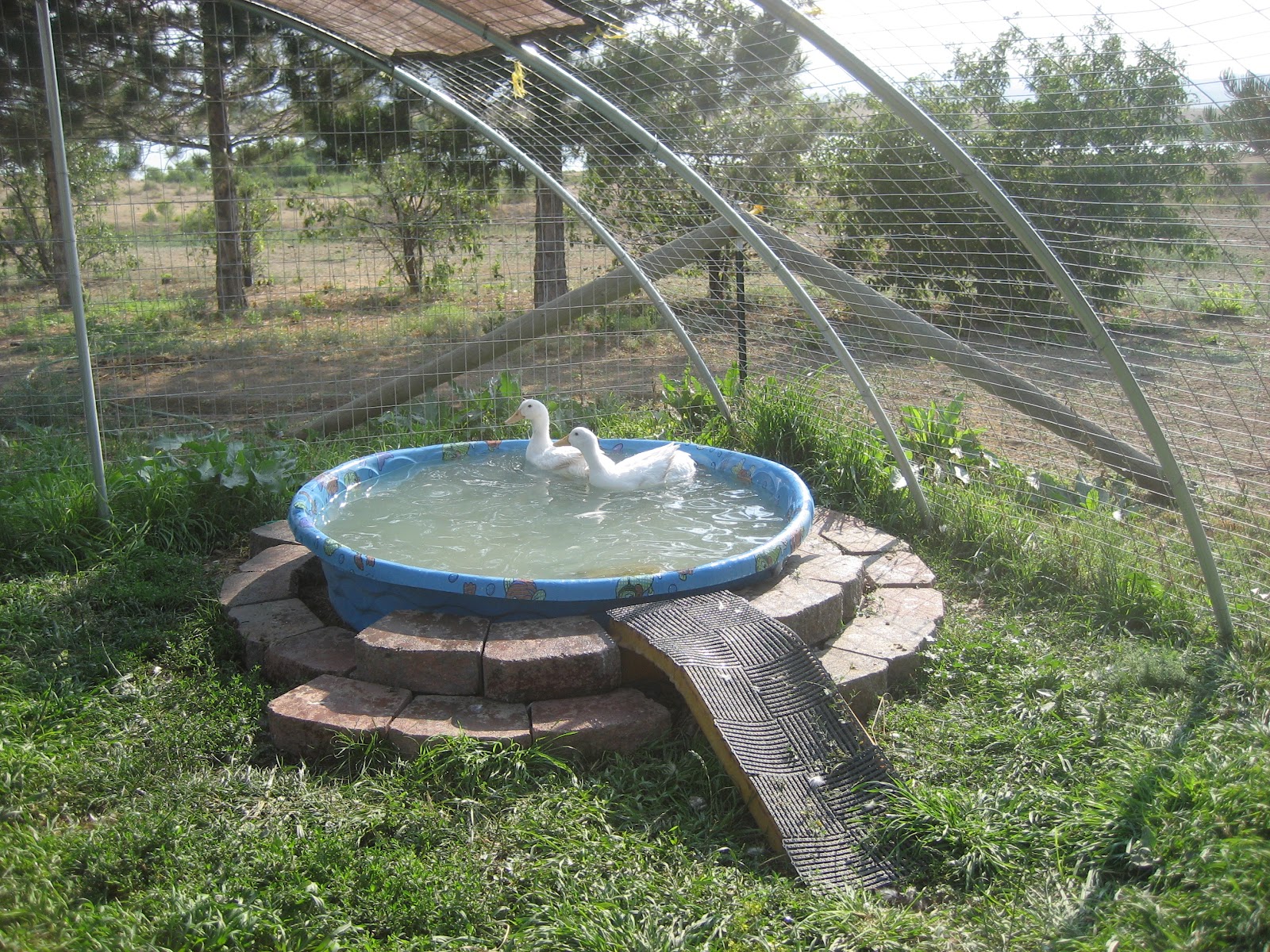
When we let them out with the others, the first thing they did was find the pool.  One of them got in pretty quickly, but it took a while for the other to figure out how to get in.  We’ve tagged the new ducks with red and yellow leg bands, to fit in with our color scheme.


Our previous foursome are somewhat upset with the addition, some ducks more than others.  Orangey, our crankiest, bossiest duck, squawks at them constantly and frequently chases them around.  I’m sure they’ll all get used to each other in time, but for now, it’s pretty much the fearsome foursome against the timid twins.  Our “harleys” have the home field advantage, but I’m sure the twins will hold their own, and I think they’ll like their new home.

We were afraid there might be quite a ruckus in the duck house overnight, so we kept the harleys in and the twins out in the pen for a peaceful night of rest.  We got one egg from the twins this morning, after the mishap one of them had on the way home.  It’s a bit bigger than the ones we get from our welsh harlequins.  We’re looking forward to a happy life for all ducks!


Almost 100%

These ducks are really cranking them out!  Almost every day we find four eggs from these four ducks.  One day there were only three, and the next day five, so I suspect I missed one the first day, although I have heard it is possible for a duck to lay two in a day.  When that happens, I’ll post a photo!

Usually the eggs are all in one of the nest boxes, although they have occasionally chosen a spot in the middle of the floor to make a nest.  Funny.  When we have enough extras, perhaps we’ll sell some to the highest bidder!  (Or feed them to the dog.)

The winter weather really varies, from warmer days to colder ones.  We’ve been keeping the pool full for them, although some days it never melts.  They sure enjoy it when they can, and it isn’t much bother for us to keep it full, so we’re keeping them spoiled.

Four Ducks A- Laying

We’ve been getting three eggs almost every day, sometimes just two or one, but haven’t been sure whether all four ducks are laying.  This morning there were 4 eggs, so now we know they’re all laying.  So far, our egg eating has pretty much matched our egg production, so four layers is a good number for us.  We’ve read that each of these Welsh Harlequin ducks lay an average of five eggs per week, so it seems we’re probably right on track.

Since the drakes are gone, the females are much calmer.  It’s a nice little flock.  When it got really cold in early December, we emptied their pool, which they missed.  We had some warm days and nights last week, so filled it again for them, and they’ve had so much fun in it, we may just keep it up.  Most nights it freezes over, and most days it thaws enough by afternoon that they can get in.  As long as the well isn’t too frozen to pump water, I guess we’ll try to keep cleaning and filling it.  In summer we were doing it every three days or so, now it’s ok to do every 4-5 days.  With fewer ducks and colder temps it doesn’t seem to get as dirty.

Egg in the Nest Box

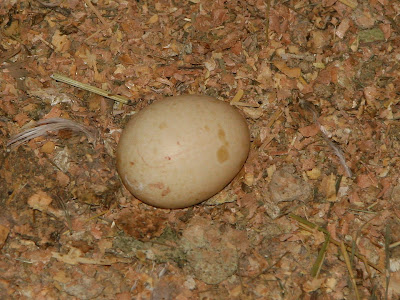
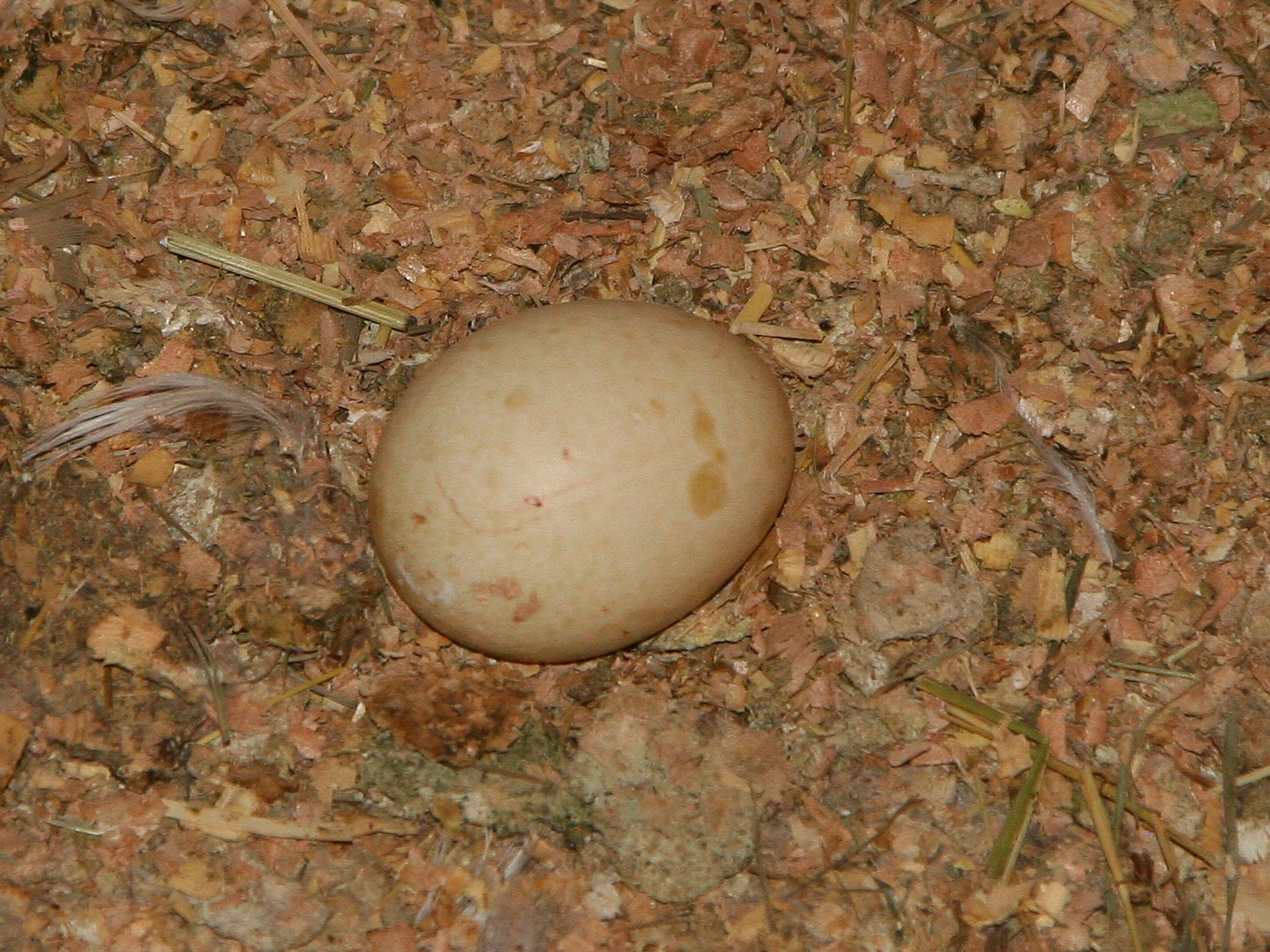
I found another egg this morning, and it was in the next box.  I didn’t see it at first, but the next boxes had a lot of the wood shavings pushed out of them.  When I shoved the shavings back in, something went bump, and sure enough, there was another egg.  Two days in a row; I guess we’re in business.  Thanks, girls!

Egg!!!

First Egg – 12/15/11 – Ducks at 27.5 weeks old.

Way to go, girls!  They’ve done it.  One egg was found this morning, right in the middle of the duck house.  Wahooo!  I don’t know who laid it, of course, but my guess is “Orange”, the duck with the orange band on her leg.  She has seemed to me the most mature and has the most distinct blue on her wing, indicating she’s the most completed with her molt process.  This morning she’s being pretty vocal, as well, more so than the others.  Now we’ll need to train them to lay them in the nest boxes.  I put it into the box and will leave it there a bit to give her the idea that’s where it belongs.  Keep up the good work, gals!

Slacker Quackers

These slacker quackers still have not laid any eggs.  They are now 6 months old (27 weeks).  We have read different ideas as to when they should commence, and had hoped that we would have eggs by now.  In Storey’s Guide to Raising Ducks, David Holderread mentions in one place that they should commence between 16-20 weeks of age.  In another place he suggests 20-24 weeks.  This assumes adding artificial lighting in the fall to imitate spring.  Another resource I found on the web said 22-26 weeks.  When we hit 25 weeks we were still hopeful.  In Ducks and Geese in Your Backyard, Rick Luttman says they won’t lay until the first spring after hatching.  He may be right.  Dang.  We really wanted to have eggs by now.

We’ve tried to “imitate spring” by adding light and increasing that light 15 minutes per week, as suggested by Holderread.  Since it’s been so cold (below freezing nightly, and sometimes all day long), we’ve added heat in their house at night.  The ducks may appreciate the cozy warmth, but still no eggs.

On another note, we butchered Whitey and Drakey a couple of days ago.  It’s just the four girls remaining.  Whitey (the White Appleyard) wasn’t so cute anymore, which was the reason we kept him around for a while.  He was bossy and protective of his girls, which wasn’t unexpected.  He would frequently put his head down and run at us like he was going to come get us.  Funny, really.  We’d been calling him “Christmas” for a bit, and he just may be our Christmas dinner, depending on how many we’ll be feeding that day.  He’s a LOT bigger than the others were.  He dressed out at a little over 3 1/4 lbs.  Drakey was about 1 3/4 lbs.

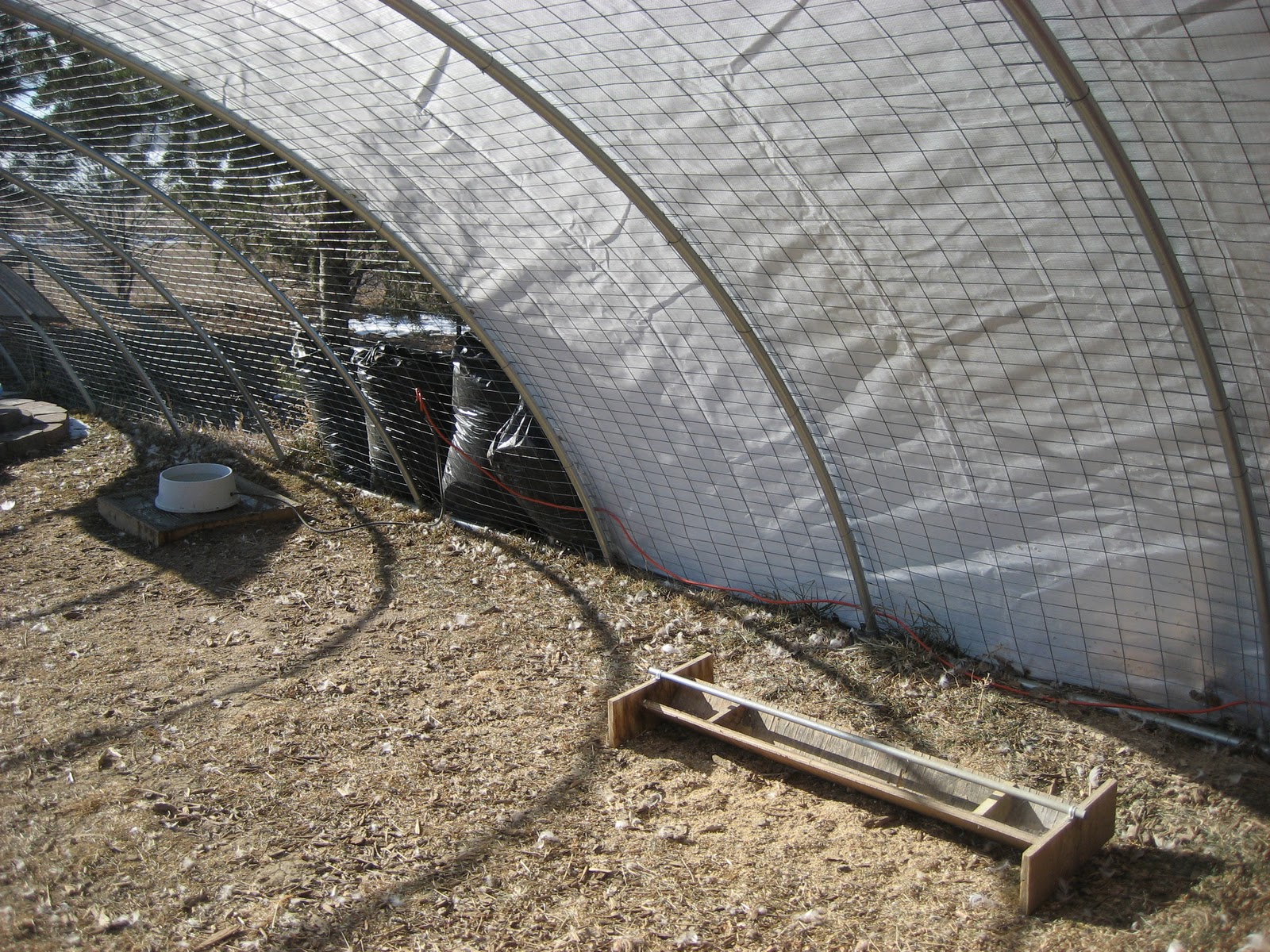
Now that winter is here, we found that on the coldest days, which have not been above freezing, the water freezes even during the day.  Usually it isn’t so cold that the ducks can’t break through the surface of ice to get water, but on some days it got awfully thick between times they went to drink, and it was a mess.  We ended up putting out an electric dog bowl, which is working well.  On the coldest days even it freezes a bit, but it’s much better.  At night, they don’t get water, which is what we’ve done for quite some time.  They are locked in their house with no food or water.


We’ve also provided for them a nice shelter, to keep out the wind and snow and keep it off their food.  It’s working out quite nicely, with the down slope on the windward side.

Boy, these ducks have the swankiest duck house and yard.  You’d think they would return the favor and give us some eggs in return.  They just don’t know how good they’ve got it.

Ducks at 22 Weeks

Whitey, Drakey, and the four girls

The ducks are now 22 weeks old, and we had expected to see eggs by now.  Every morning I check, and still no eggs.  On about October 12th, at 18 weeks old, we put some fake eggs in their next boxes.  Hopefully this will teach them to lay them there, in the next boxes.  We’ve also been increasing their day length with artificial light coming on each morning, on a timer.  Each week or so it’s been changed to come on earlier and earlier, but still no eggs.

Fake eggs in next boxes.

                                                              Some sources have suggested that they should start laying between 16-20 weeks of age, other suggest 20-24 weeks (so we’re right in there), others mention that it won’t be until the first spring after they were hatched.  We hope it’s not the latter.

You can bet I’ll be taking photos and posting when we get that first precious egg!