Egg!!!

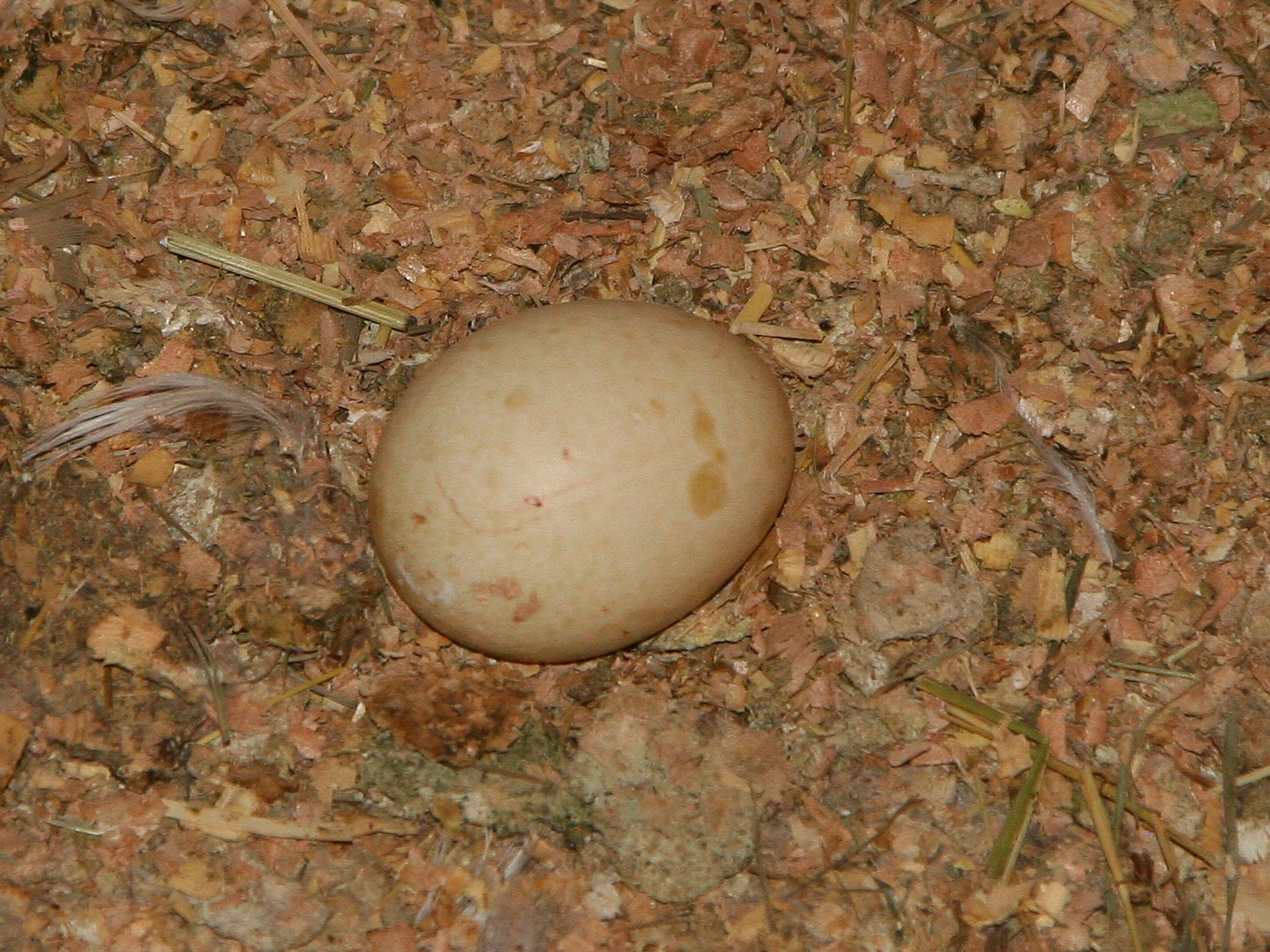
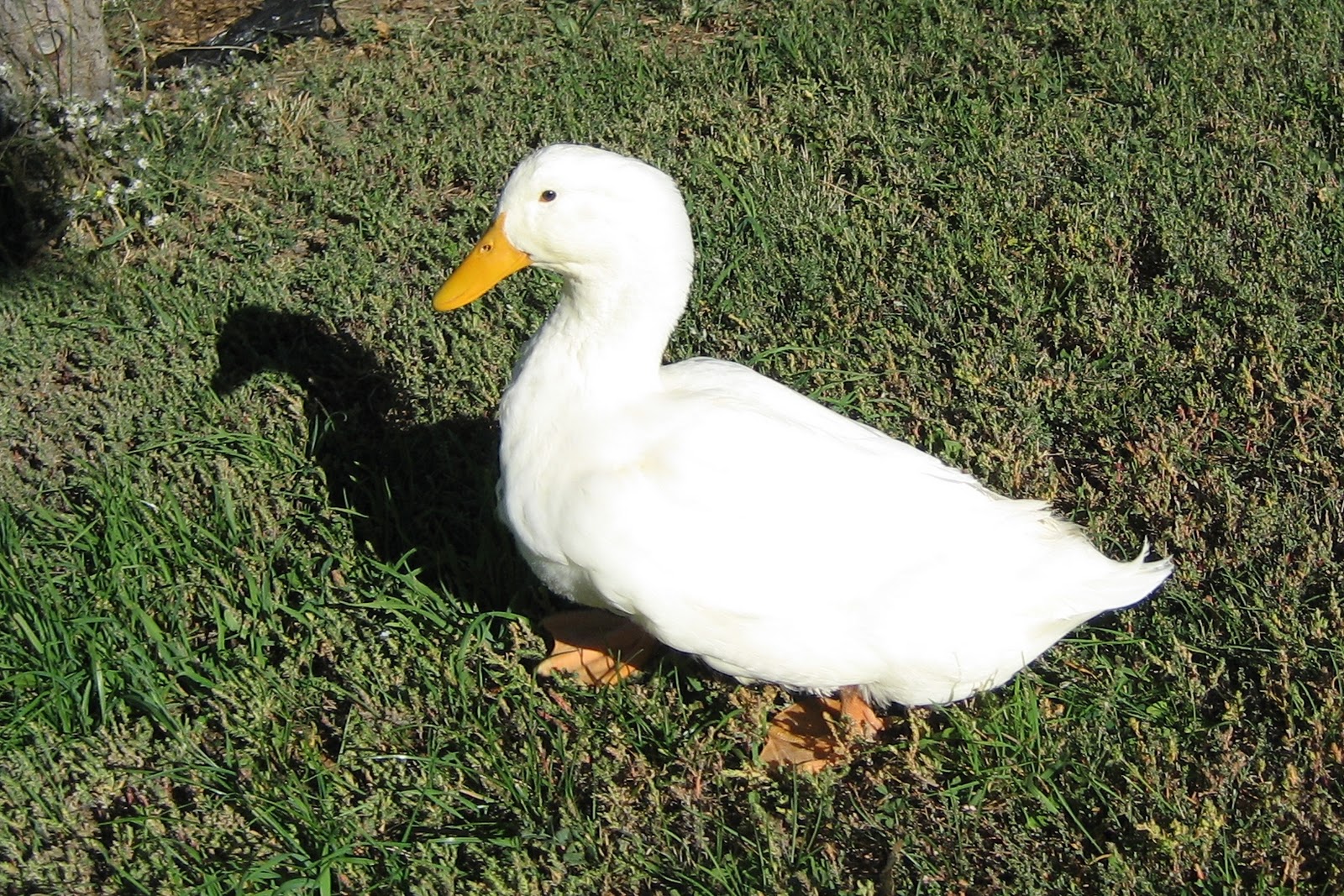
First Egg – 12/15/11 – Ducks at 27.5 weeks old.

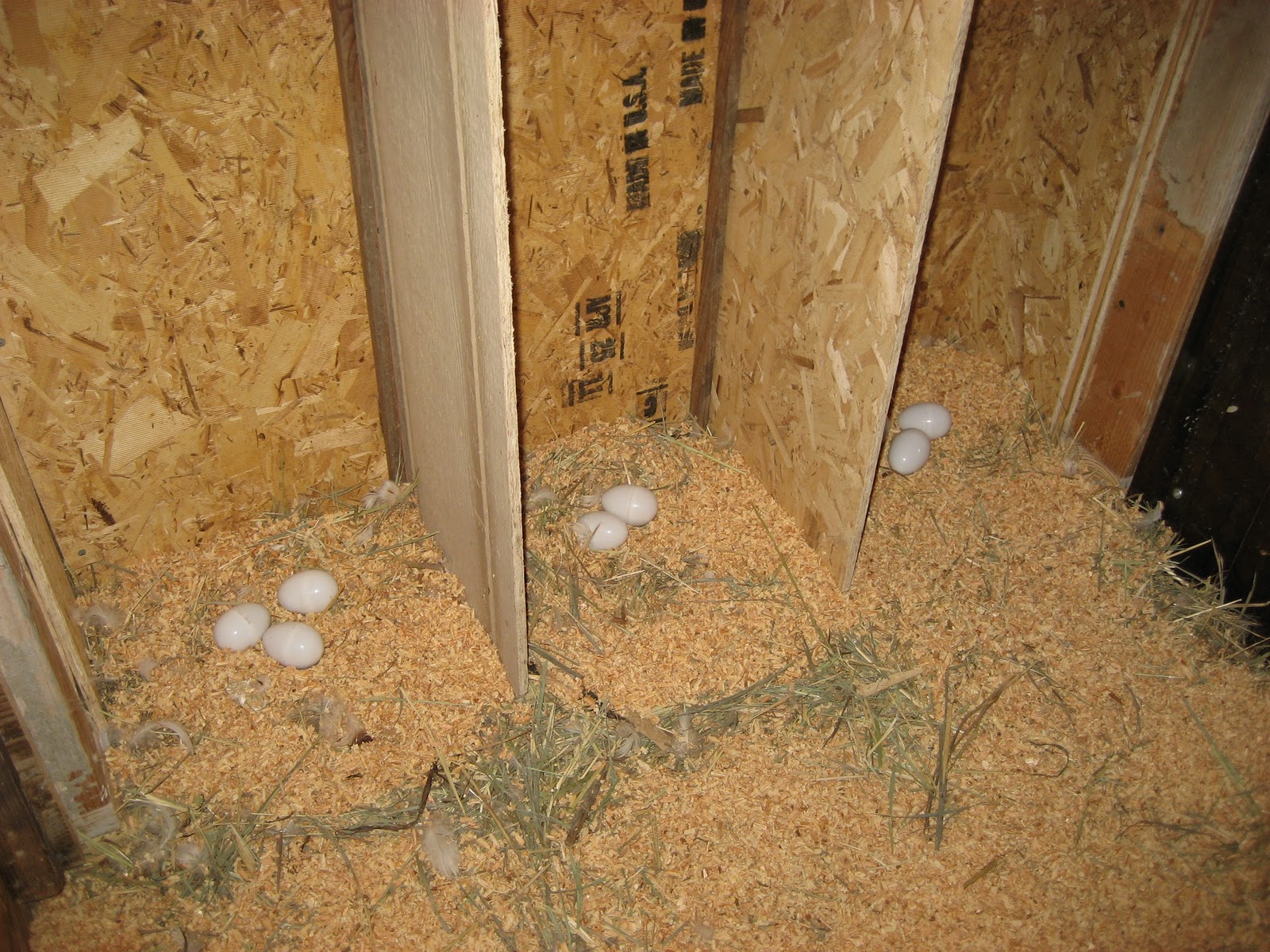
Way to go, girls!  They’ve done it.  One egg was found this morning, right in the middle of the duck house.  Wahooo!  I don’t know who laid it, of course, but my guess is “Orange”, the duck with the orange band on her leg.  She has seemed to me the most mature and has the most distinct blue on her wing, indicating she’s the most completed with her molt process.  This morning she’s being pretty vocal, as well, more so than the others.  Now we’ll need to train them to lay them in the nest boxes.  I put it into the box and will leave it there a bit to give her the idea that’s where it belongs.  Keep up the good work, gals!

Slacker Quackers

These slacker quackers still have not laid any eggs.  They are now 6 months old (27 weeks).  We have read different ideas as to when they should commence, and had hoped that we would have eggs by now.  In Storey’s Guide to Raising Ducks, David Holderread mentions in one place that they should commence between 16-20 weeks of age.  In another place he suggests 20-24 weeks.  This assumes adding artificial lighting in the fall to imitate spring.  Another resource I found on the web said 22-26 weeks.  When we hit 25 weeks we were still hopeful.  In Ducks and Geese in Your Backyard, Rick Luttman says they won’t lay until the first spring after hatching.  He may be right.  Dang.  We really wanted to have eggs by now.

We’ve tried to “imitate spring” by adding light and increasing that light 15 minutes per week, as suggested by Holderread.  Since it’s been so cold (below freezing nightly, and sometimes all day long), we’ve added heat in their house at night.  The ducks may appreciate the cozy warmth, but still no eggs.

On another note, we butchered Whitey and Drakey a couple of days ago.  It’s just the four girls remaining.  Whitey (the White Appleyard) wasn’t so cute anymore, which was the reason we kept him around for a while.  He was bossy and protective of his girls, which wasn’t unexpected.  He would frequently put his head down and run at us like he was going to come get us.  Funny, really.  We’d been calling him “Christmas” for a bit, and he just may be our Christmas dinner, depending on how many we’ll be feeding that day.  He’s a LOT bigger than the others were.  He dressed out at a little over 3 1/4 lbs.  Drakey was about 1 3/4 lbs.

Now that winter is here, we found that on the coldest days, which have not been above freezing, the water freezes even during the day.  Usually it isn’t so cold that the ducks can’t break through the surface of ice to get water, but on some days it got awfully thick between times they went to drink, and it was a mess.  We ended up putting out an electric dog bowl, which is working well.  On the coldest days even it freezes a bit, but it’s much better.  At night, they don’t get water, which is what we’ve done for quite some time.  They are locked in their house with no food or water.


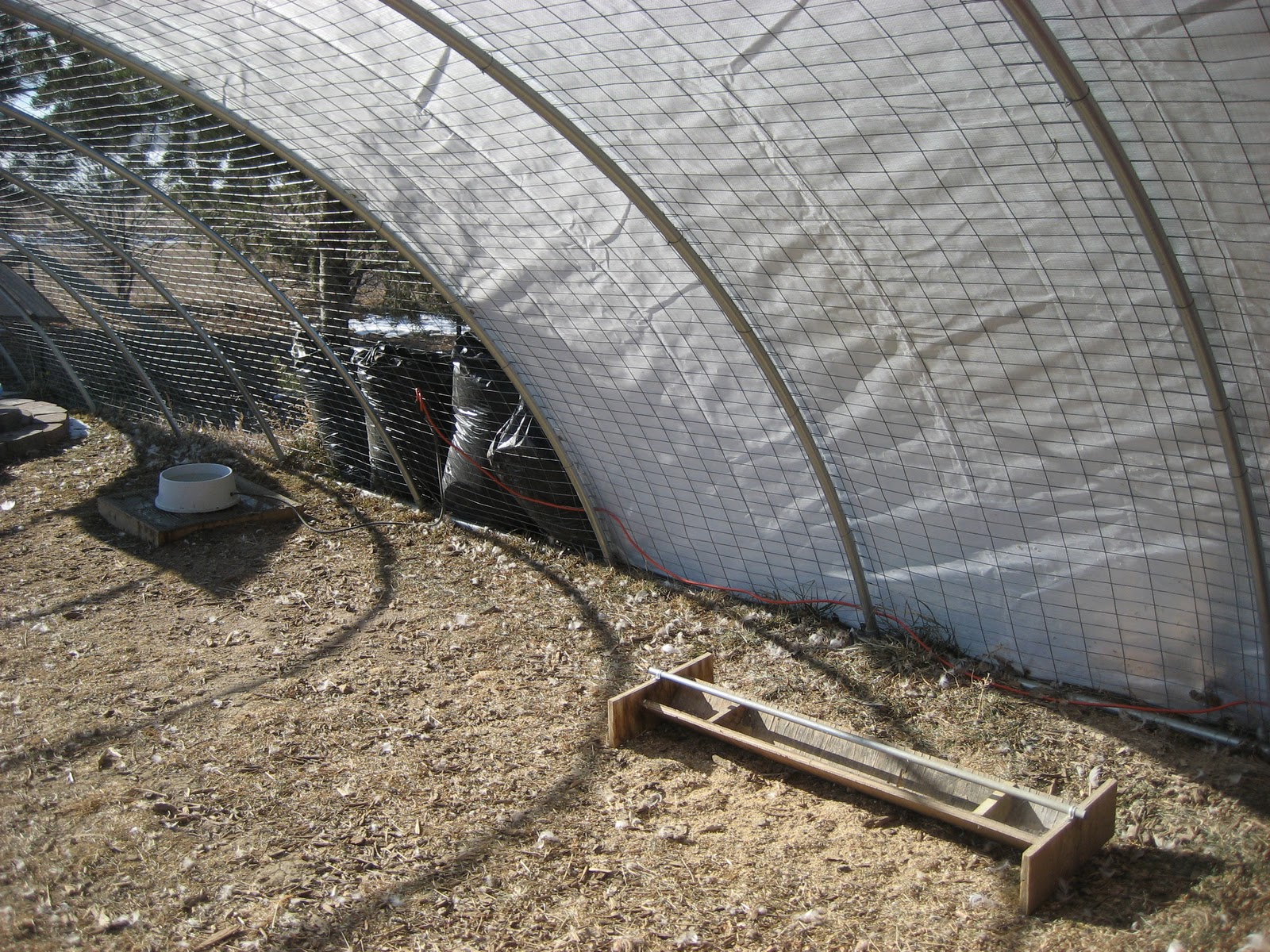
We’ve also provided for them a nice shelter, to keep out the wind and snow and keep it off their food.  It’s working out quite nicely, with the down slope on the windward side.

Boy, these ducks have the swankiest duck house and yard.  You’d think they would return the favor and give us some eggs in return.  They just don’t know how good they’ve got it.

Greenhouse!

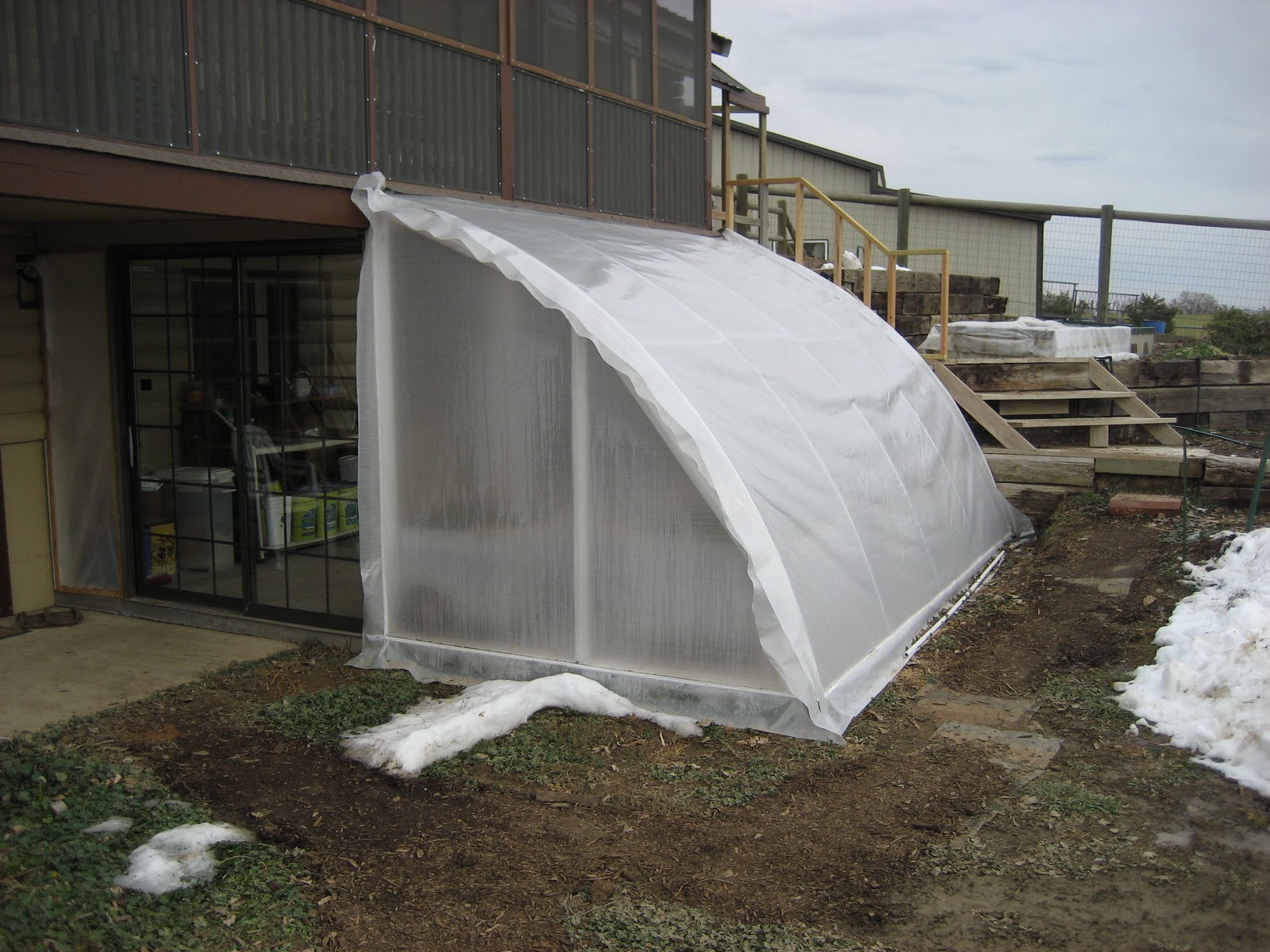
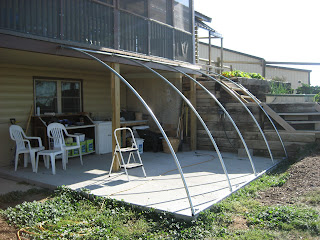
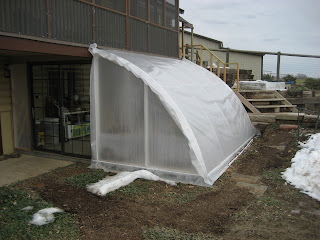
Greenhouse, It faces south.

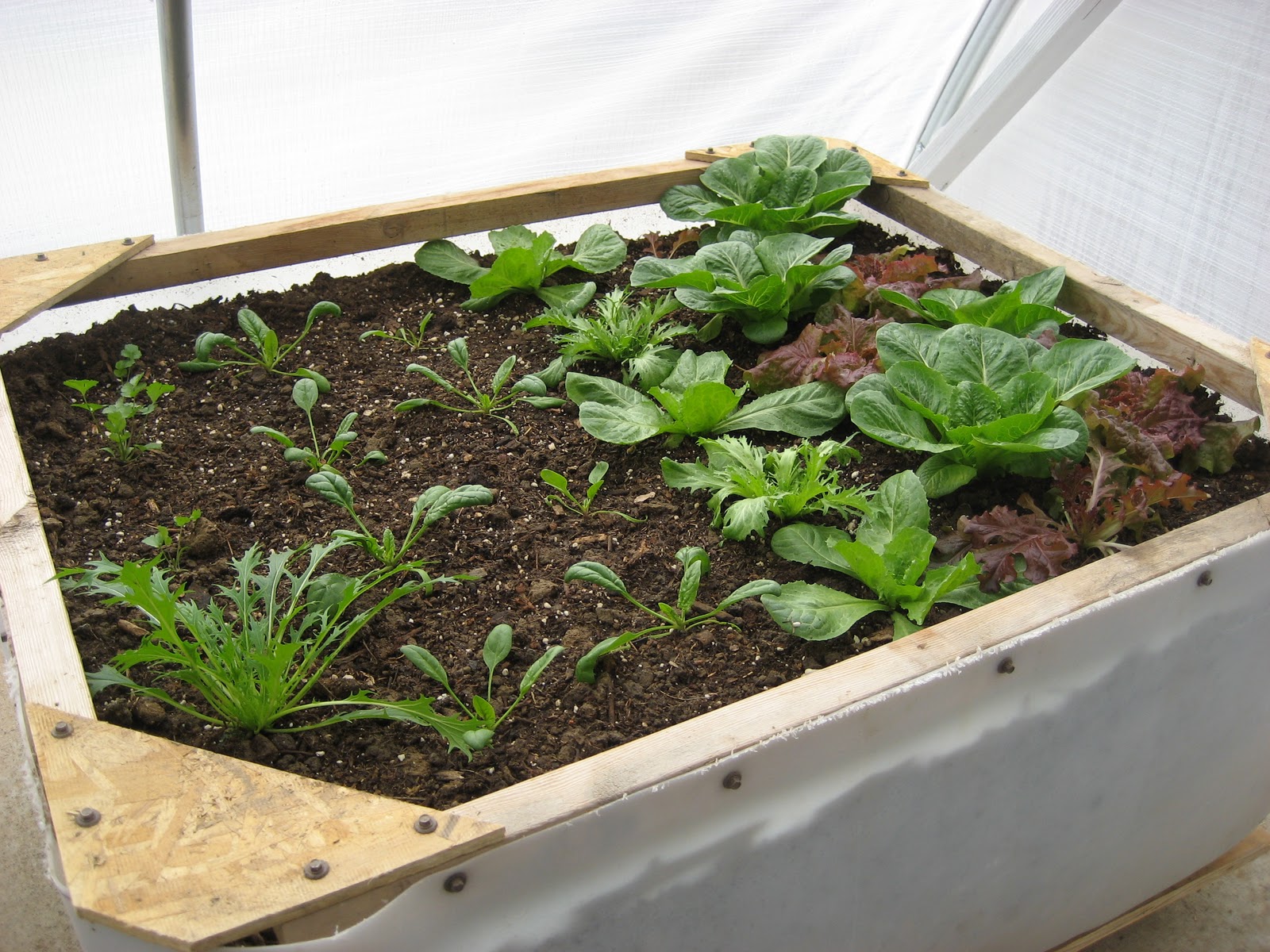
The greenhouse is done!  We finally have it all completed and planted, and are excited to see how well things will grow.

First, Tim put the hoops up, and side supports.  We got some “woven poly” from Northern Greenhouse Supply, along with their poly-fastener, which worked quite well to stretch the poly across the hoops.  These are great products, and Bob was very helpful answering questions.  We received our order quickly, too.
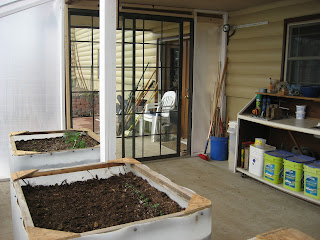
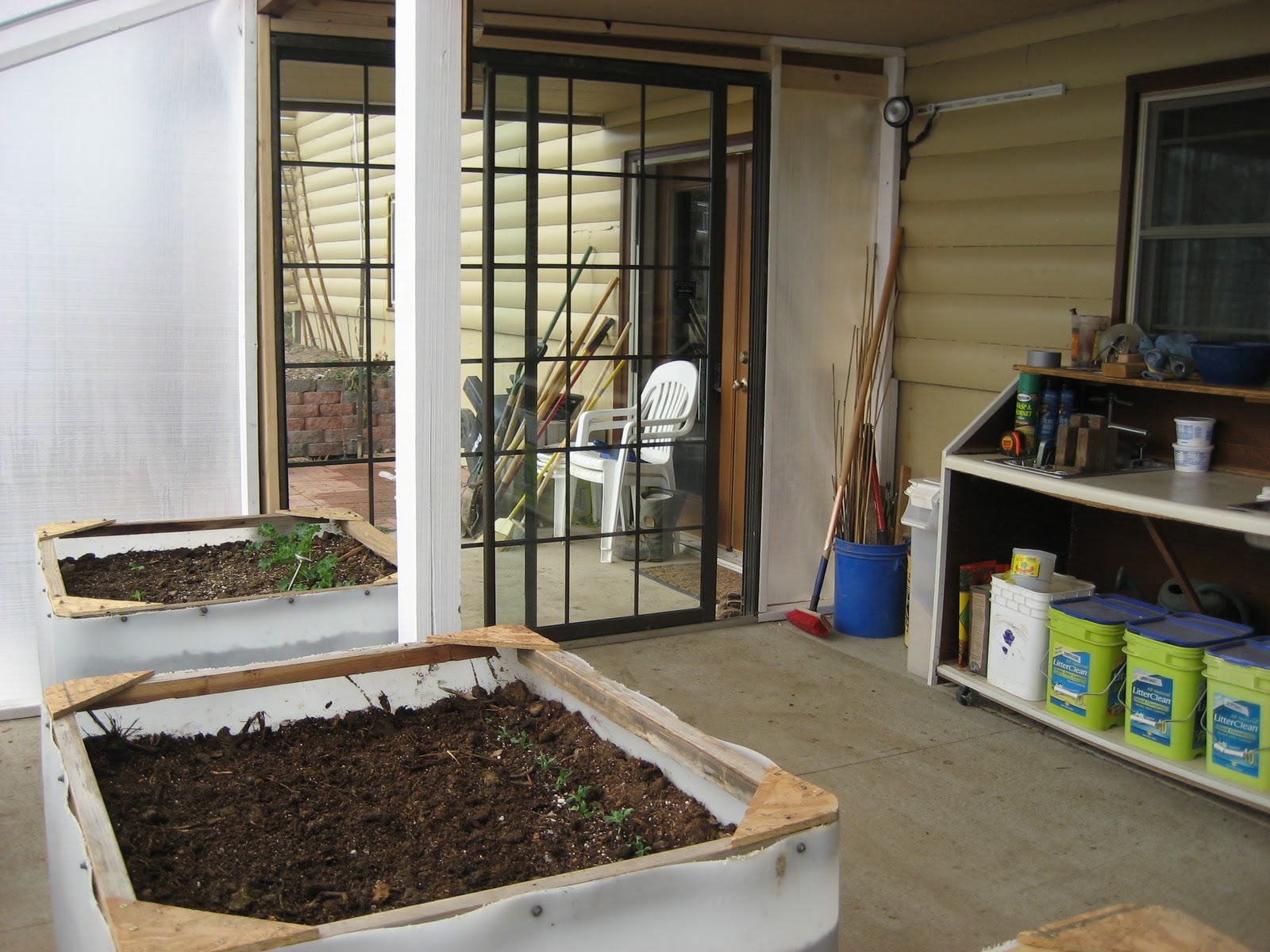
Nice sliding door

After stretching the poly over the south side, we put some poly on the curved part of the side wall, still not sure what we would do for a door and the side by the wall of the house.  We managed to get a free, double-paned sliding door, which worked out perfectly.  It also has a screen door which we will add to it when we need the ventilation.  We still need to put in some vents on the far wall, but will do that in time.  Right now we don’t really think we need it.  Soon we’ll also be setting up a fan, just to get the air moving a bit.  We’ll probably run it each day for awhile.
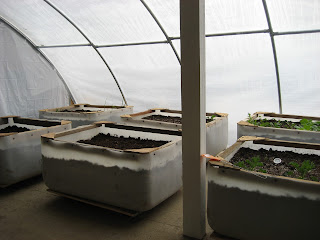
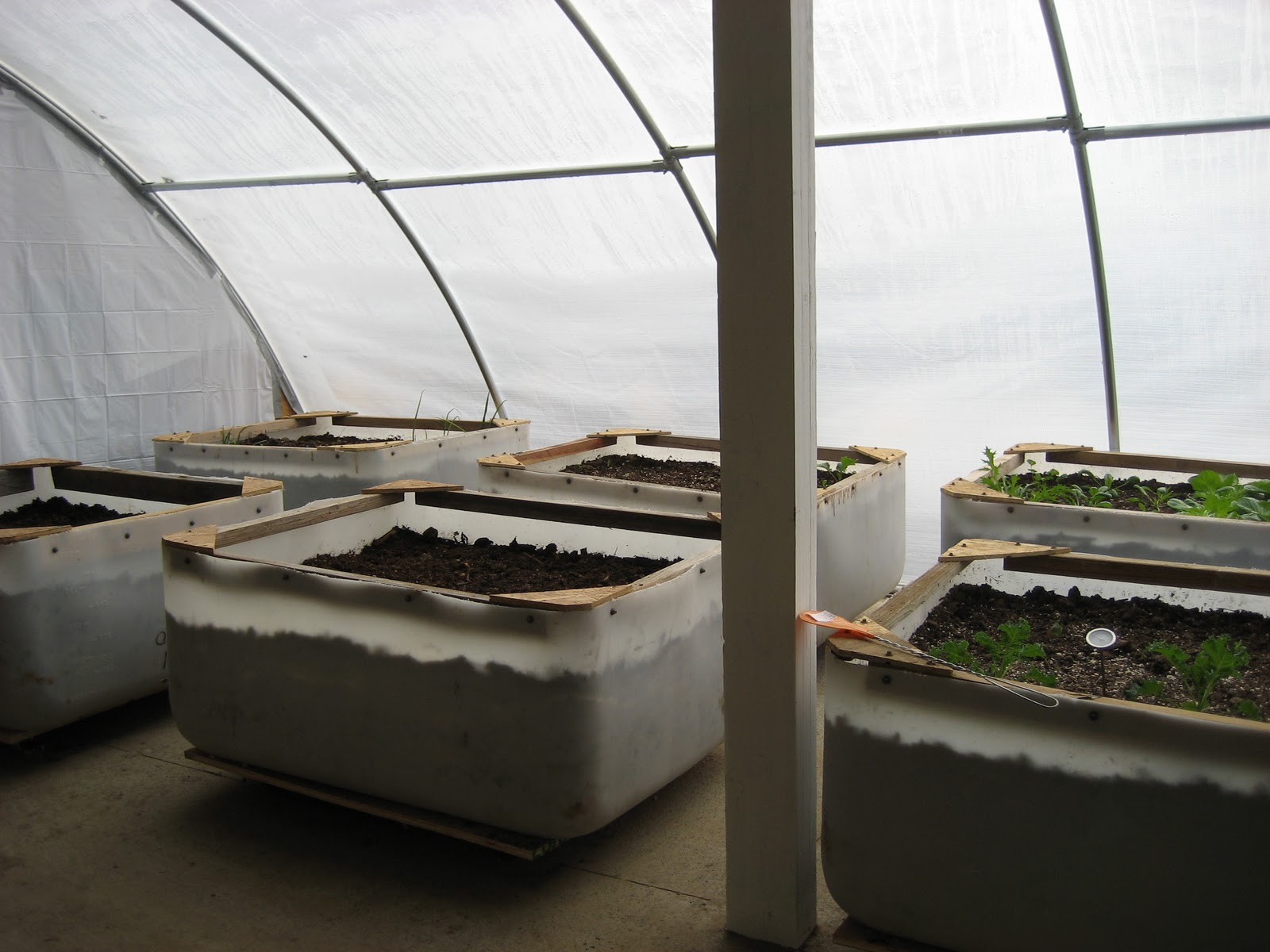
6 bins for planting

We had a few challenges, such as the bins we are using as beds.  We got some 350 gallon food-grade containers, cut them in half and put them on dollies so we can move them around a bit.  The weight of the soil in them made them each sag toward one side, so we had to support them better on the bottom with plywood.  This took extra time re-doing them before planting.  These had been used for barbeque sauce.  Even after cleaning, we still get an occasional whiff of the barbeque sauce.  Our veggies just may be pre-sauced!

We also had some challenges determining what kind of soil to use.  Some references suggested only using purchased potting soil, which we didn’t want to do.  It would be a LOT of potting soil to buy.  We winged it with a mixture of plain Colorado soil at the bottom, gradually mixing in some soil we dug out from one of our raised beds (well amended) complete with lots of earthworms, some peat and perlite and homemade compost.  There’s a higher percentage of perlite and compost near the top of each bin.  Hopefully this’ll do the trick.
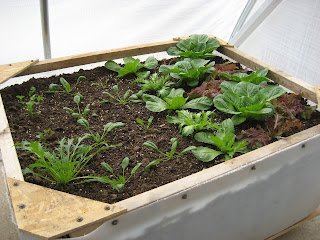
Bin with salad greens

I started most things in the house previously, under grow lights.  I wish I’d started more things sooner, but now I’ll know better what I should start and when I should start them. I’ve planted salad greens (lettuce, spinach, endive, mizuna), cilantro, beets, kohlrabi, leeks, scallions, garlic, swiss chard, kale, peas, napa cabbage, rutabagas and a few carrots.  All of these things should do well in cooler weather.

Yesterday afternoon it was 80 degrees in there, while about 50-60 outside.  The

6 bins for planting

humidity inside is running around 50-60%, much more humid than outside most of the time.  This morning it was about 20 degrees outside, and over 40 in the greenhouse.  The soil temperature has been running around 60 degrees.

My potting bench & work area is neatly against the wall, and this is also where we keep the duck feed and get it ready to take out.  For the winter, we’re taking their water out each day in a bucket, since we can’t keep the well water hose out there in freezing temps.

As you can see, it’s a pretty dandy setup!

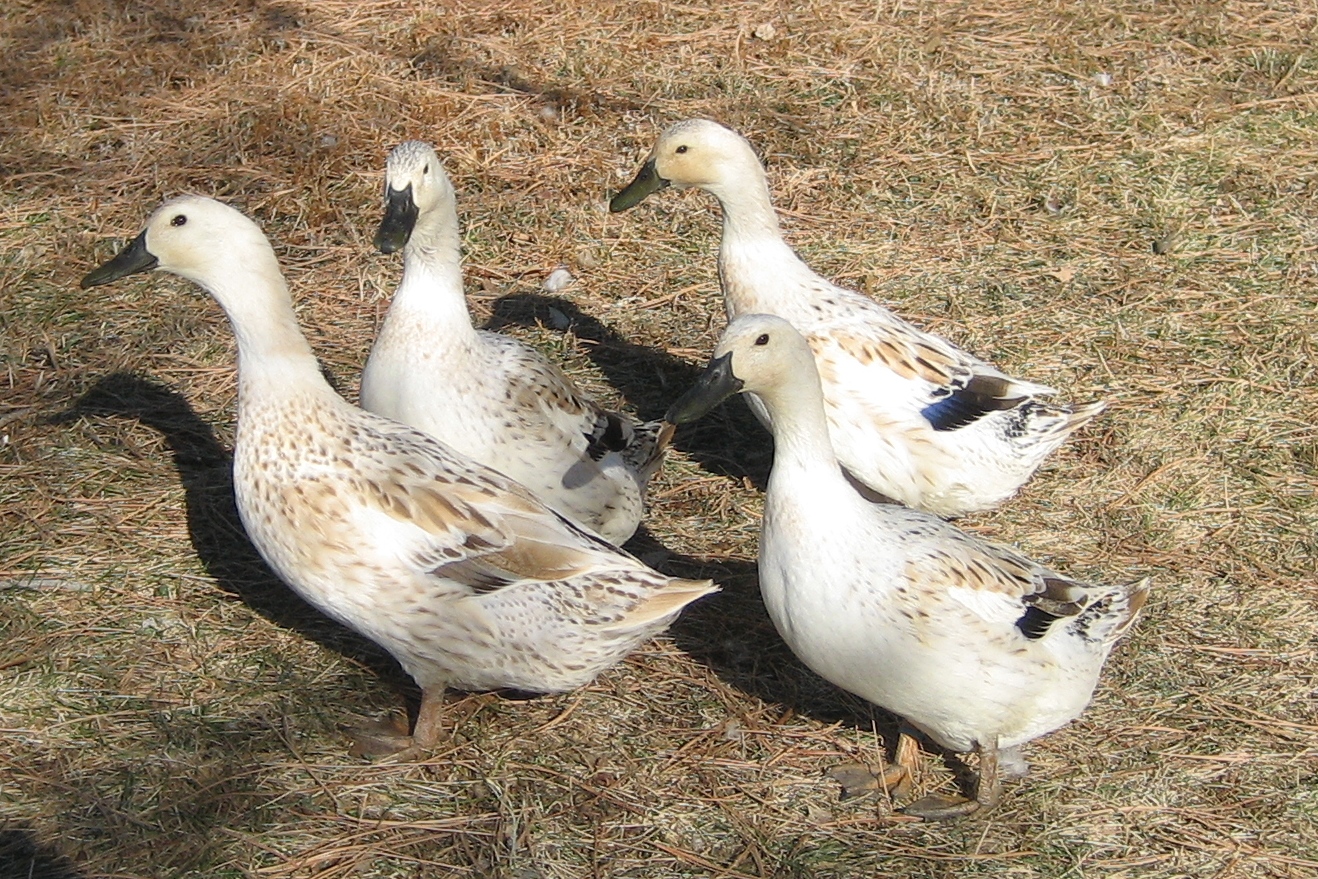
Ducks at 22 Weeks

Whitey, Drakey, and the four girls

The ducks are now 22 weeks old, and we had expected to see eggs by now.  Every morning I check, and still no eggs.  On about October 12th, at 18 weeks old, we put some fake eggs in their next boxes.  Hopefully this will teach them to lay them there, in the next boxes.  We’ve also been increasing their day length with artificial light coming on each morning, on a timer.  Each week or so it’s been changed to come on earlier and earlier, but still no eggs.

Fake eggs in next boxes.

                                                              Some sources have suggested that they should start laying between 16-20 weeks of age, other suggest 20-24 weeks (so we’re right in there), others mention that it won’t be until the first spring after they were hatched.  We hope it’s not the latter.

You can bet I’ll be taking photos and posting when we get that first precious egg!

Ducks’ First Snow

It’s actually November now, but the first snow was October 26, so I’m backdating this post to reflect the correct date the photo was taken.  This was our first snow of the season, and it was a doozey.  8-10″ or so of the stuff fell on our place.

It was the ducks’ first experience with the cold, white ground.  I attempted to video their first steps in it, but they were awfully resistant to coming out of the house.  I finally went inside and pushed each duck out the door.  After that it still took them quite a while to head over to their food or water.  Finally they ate, and several minutes later, they drank.  I took several videos, until the battery ran out.  Here’s just one of them:

Their pool was filled with slush, and it took them a while to go there, too, but finally they did, after it had melted some.

The next day they were hesitant to step out, but quicker than the first day.  By the third day things were back to normal and they came right out.  Now (11/7) they have no problem walking all over the snow.

Pumpkin-Apple Granola

I’m always on the lookout for things that are high in fiber, low in sugar and fats.  I like granola, but most of the ones I find in the store are too full of sugar and oil, and don’t contain as much fiber as I want.  I’ve been trying to find or create a good recipe.  I know that pumpkin and apples are good sources of fiber, so I found a pretty good recipe for pumpkin granola* and modified it to my liking.

I like to serve it with fruit and my homemade nonfat yogurt.  My most recent favorite is this with one apple, sliced and cooked with a little honey and cinnamon, 1/3 cup of the Pumpkin-Apple Granola, and 1/2 cup of nonfat yogurt.  This is YUM-MEE!

PUMPKIN-APPLE GRANOLA
    **Printer-friendly version
5 cups rolled or flaked grains, such as oats, wheat, rye or combination
1 oz chopped dried apples
1/2 cup psyllium husk
1/4 cup flax meal
1/4 cup sunflower or pumpkin seeds
1/4 cup sliced almonds
1 teaspoon pumpkin pie spice
1 teaspoon cinnamon
1/4 teaspoon nutmeg
1/4 cup honey
1/4 cup maple syrup (100% pure maple syrup)
1/4 cup applesauce
1/2 cup pumpkin puree

1.  Preheat oven to 325 degrees F.
2.  In a large bowl, combine rolled grains, next 5 ingredients and spices.
3.  In a medium bowl, combine the honey, maple syrup, applesauce and pumpkin.
4.  Combine wet with dry ingredients until evenly mixed.  A pastry blender works well.      Mixture will be moist.
5.  Spread the mixture on a 11×17″ baking sheet lined with parchment paper.
6.  Bake for 20 minutes, stir and bake another 20 minutes or until granola is crisp and dried.  Let cool completely, then store in an airtight container.

1/3 cup serving
119 calories, 3 gm fat, 22 gm carbohydrates, 5 gm fiber, 3 gm protein

*Adapted from “Pumpkin Granola”, Two Peas and Their Pod

Greenhouse Construction Has Begun

Tim has begun to work on our greenhouse, which we will use for growing a few things in late fall/early winter, and then in late winter/early spring.  We’ll also use it for hardening off seedlings before planting them outside.  It faces the south, so gets plenty of light and warmth in the afternoons.

We’re making lots of plans, reading books and finding websites with greenhouse information.  I’ve begun starting a few seedlings in the house, which will be planted in large planters in the greenhouse.  Lettuce, spinach, endive, kale, beets, kohlrabi, some leeks and scallions are already started, and I’ll be getting some seeds for a few other cold-tolerant items.  I’m also planting some of these things in the cold frame.  I expect the cold frame things to be used first, then move on to the things that will be in the greenhouse.  Then I’ll start another cold frame in the spring.  I’m still starting the seedlings in the house under lights, as I have good success with that method using the soil blocks.

Meanwhile, it’s getting pretty cold overnight, so I’m harvesting what I need to before it’s too late.  I picked off all near-ripe tomatoes and gave them to a friend on Friday, cut off all basil near the root, washed it up last night and will dry/freeze/make pesto today.  The peppers are under the cold frame, and hopefully some of what’s there will still ripen.  I will probably pick  green tomatoes, too, and do something with those.  I need to dig up potatoes one of these days, and discover how well they did.  I’m particularly anxious to see if the sweet potatoes grew!  I’m not sure our season is long enough for them, and I got them started later than I’d hoped.  The slips I started in the house took longer to sprout than expected.

Welsh Harlequin Ducks at 17 Weeks

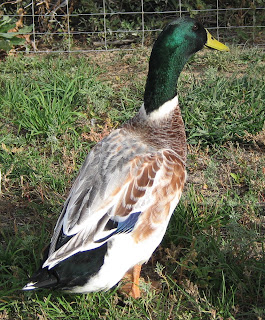
Welsh Harlequin Drake, 17 weeks old

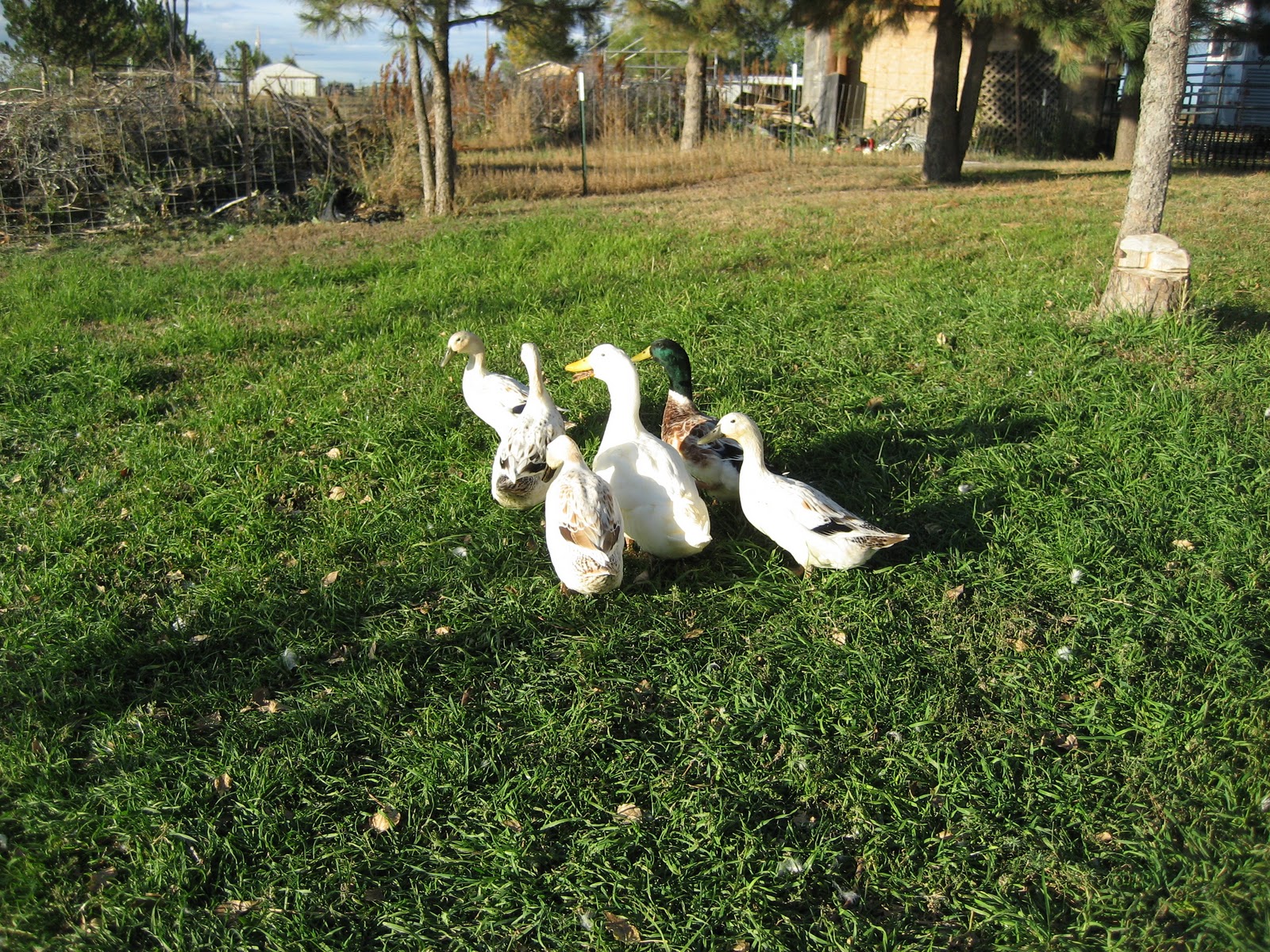
The ducks are now 17 weeks old.  They are now looking like adults, with the most obvious difference being the Welsh Harlequin drake, with his pretty green head and black butt and curly tail.  He’s quite handsome!  Whitey also now has his curly tail, and must weigh twice as much as the others.  I haven’t weighed him, but he’s awfully heavy in comparison to everyone else.  The girls aren’t very different from the last photo I posted, but I’ll post a couple with them anyway.

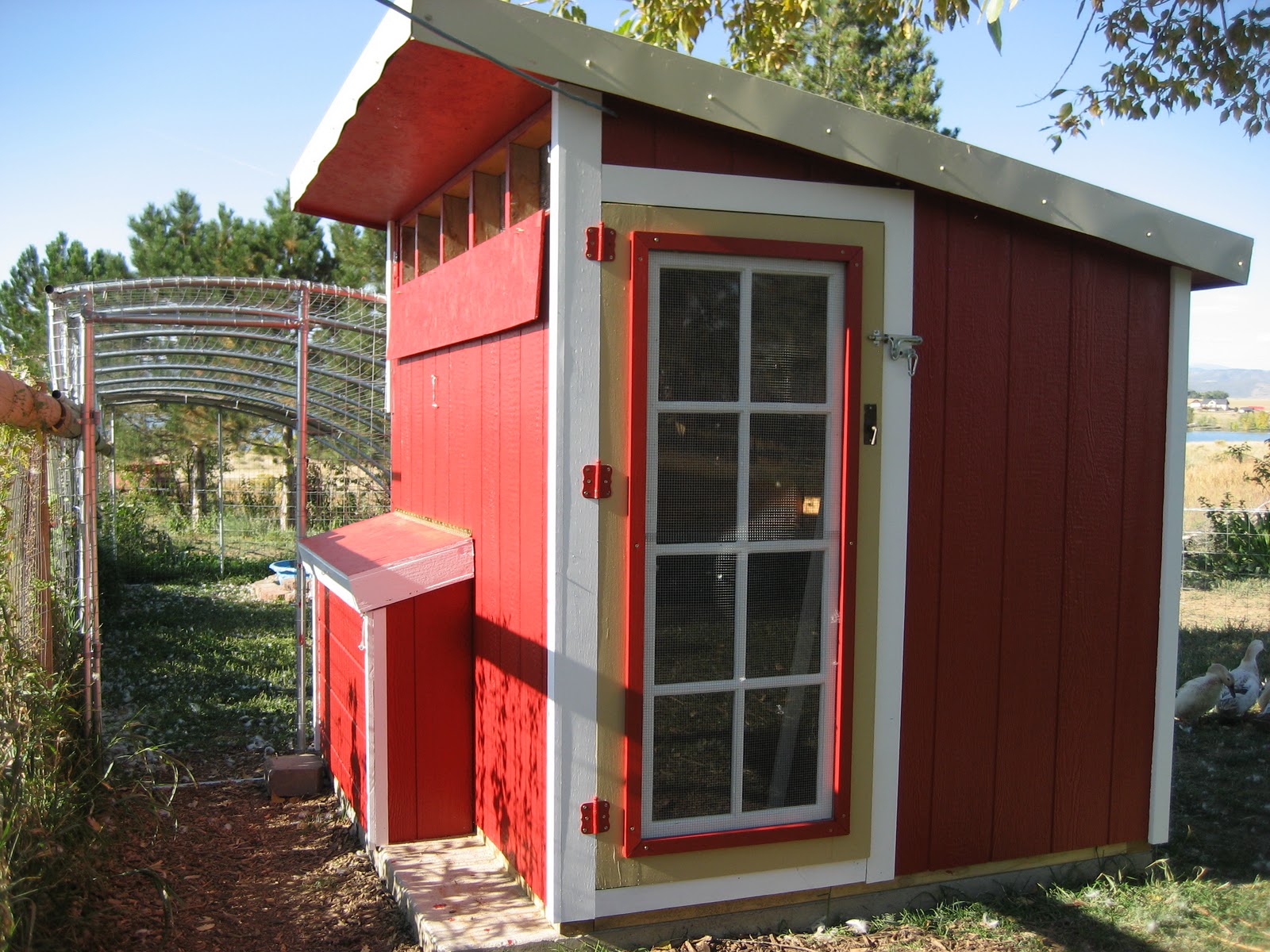
Duck House, with nest boxes at the left
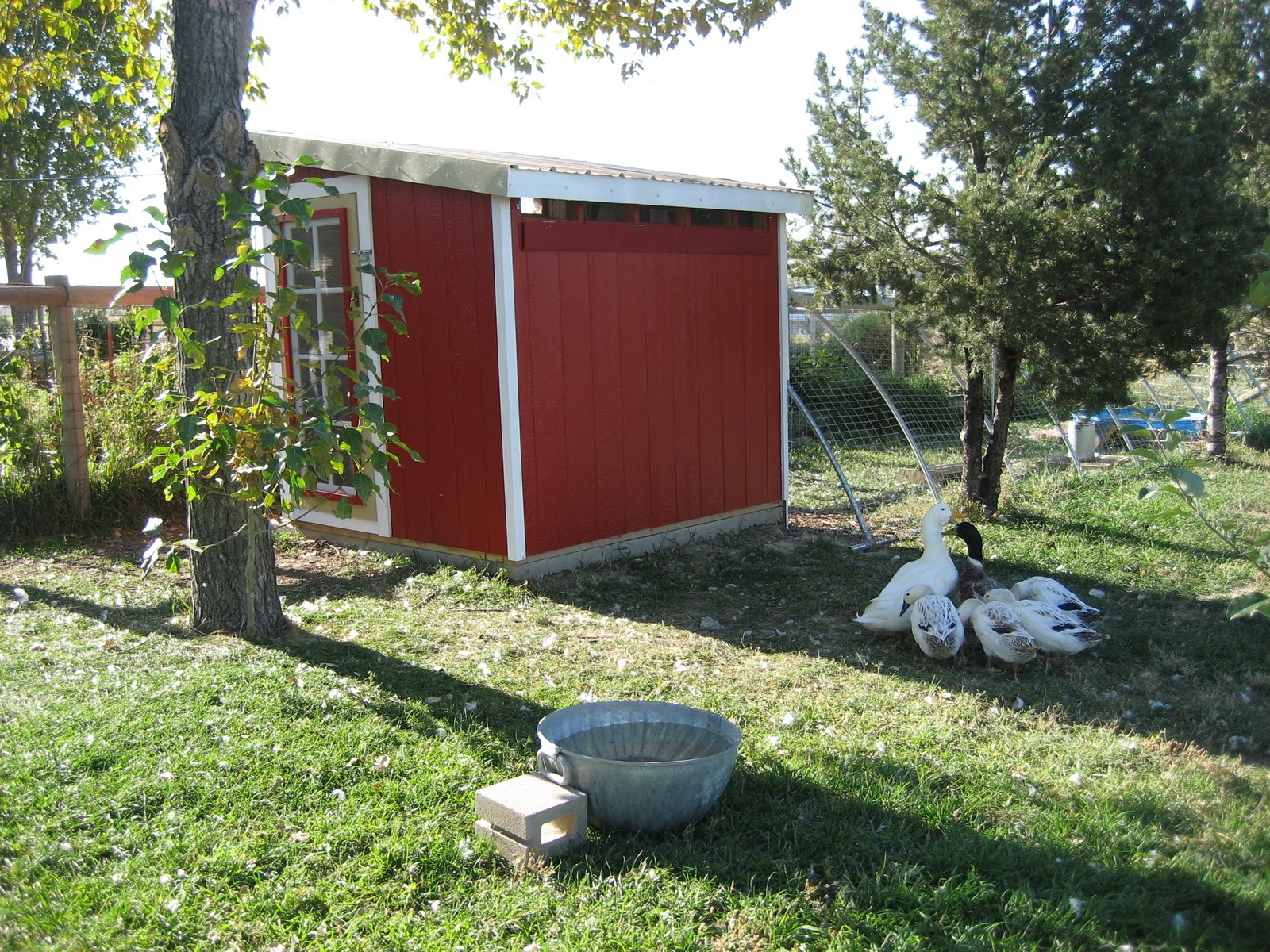
Ducks behind house

We have completed the exterior of the duck house and painted it.  The ducks pretty much have their daily routine.  They are locked inside their house at night, let out to their paddock for breakfast and a morning swim.  The cat gets to go outside at this time, while the
ducks are locked in the paddock.        Later on, the cat comes in the house, and the ducks go out to the larger yard for foraging and lounging under the shade of trees or behind their house.  Sometime in the late afternoon, they begin to squawk and beg for dinner.  Sometimes they get to enter the garden, where they head immediately to the tomatoes, which they seem to enjoy eating.  Sometimes I’ll take them a handful of cherry tomatoes and throw them out to them one at a time for a game.  The two drakes are the most eager to snap at them.  In the late evening, after dinner and around dusk, we’ll lock them back in the paddock for safety, and sometime before we head to bed, we lock them back into their house for the night.  If we leave their access door open for them, they’ll put themselves to bed, and we don’t need to herd them in.

One of the “Silver” Welsh Harlequin females

We are anxiously awaiting the first eggs, which we expect to see sometime around 20-24 weeks of age, per various resources.  We will start increasing their daytime light artificially next week, to indicate that it’s getting lighter, and therefore time to commence laying eggs.  We’ll see how that goes!  We’ll also be putting some fake eggs in the next boxes to show them where they should put them.  Again, we’ll see how that goes.

“Golden” Welsh Harlequin female

Whitey, of course, is still the one standing out of the crowd, and is quite handsome with his curly tail.

Whitey, the White Appleyard Male

Busy Gardener

I’ve been way too busy to write about what I’m doing.  I’ve picked and preserved almost 300 lbs of tomatoes.  I’ve canned diced tomatoes, tomato sauce, marinara, mexican sauce, salsa, bbq sauce, ketchup, tomato chutney, taco sauce, tomato butter, and I’m sure something else I’ve forgotten.  I’ve also dried several batches of the tomatoes.  There are still some tomatoes on the vine and I’d like to make more salsa.  Other than that, I’m about done.

I’ve picked, frozen, refrigerated or dried other things, too: corn, beans, peas, carrots, onions, garlic, basil, thyme.  I didn’t get much summer squash this year.  One by one, all the plants died after a slow start to begin with.  They had trouble starting due to cold weather, then cucumber beetles.  They were finally growing ok, but the squash bugs got them one by one, then some powdery mildew on the last two survivors.  I pulled them up and trashed them, as they were also being eaten by the squash bugs that wouldn’t die from the organic pesticides I tried.  I guess next year I’ll be more proactive with bug control!  After working to get cucumbers to grow I had two plants, until one shriveled up and died.  The last plant produced two cucumbers before its end.

The raspberries and blackberries are giving us their first fall crop of nice berries.  I got ONE honeyberry off one of the two plants–hopefully next year they will bear more!  The older strawberry plants have been producing a fall crop after a midsummer rest, but the newer plants (planted this year from starts I bought from the nursery) haven’t produced at all.

I did more beans to dry this year, and they are hanging up drying–ready to shell now, I’m sure, but I’m too busy to do that just yet.  After I see how many I get and cook them, I’ll decide whether I want to do that again.  They are so cheap to buy, it may not be worth the bother, unless the quality is much better.

Soon I’ll be digging up potatoes and sweet potatoes.  The butternut squash is still on the vines, although I suppose I could pick it any day.  For all the vines, I only got about five delicata squash, which are picked and curing.  The buttercup didn’t make it at all, I fear they also suffered from cucumber beetles and squash bugs.  Dang!

I’m already beginning to sketch out next year’s garden, deciding what to grow and where to put each thing.  I’ll be planting onions and garlic soon, so needed to know where I will put them.  I’ve planted a few things in the area that will be a fall cold frame.

Tim is beginning to construct our greenhouse, and I’ve begun some seedlings in the house that will go out there for the fall.  Hopefully I can grow some salad items, kale, leeks, beets and kohlrabi for an extended period of time.  Then, I should be able to start a few things early in the greenhouse, and use it for growing seedlings and hardening things off before going outside.

Whew!

Duck Dinner

Friday night we had our first duck dinner.  We marinated it and grilled it.  It was pretty good. We each had a breast and felt it was plenty.  The next day we each finished off a thigh/leg piece.  I’m still not sure it’s worth all the work to raise and butcher them for so little meat.  If we do, we’ll raise a larger breed for meat, like Whitey, an Appleyard.  We’ll have to keep thinking about it.

DUCK MARINADE FOR GRILLING
1/4 cup Worcestershire sauce
2 Tblsp. olive oil
1/2 tsp. hot sauce
2 Tblsp. minced garlic
1/4 tsp. black pepper
Mix together and marinate duck pieces at least 30 minutes or overnight.